

Get faster WiFi for your entire home for $107
TL;DR: As of September 19, you can get a grade-A refurbished Linksys Velop Whole Home
2023-09-19 17:47
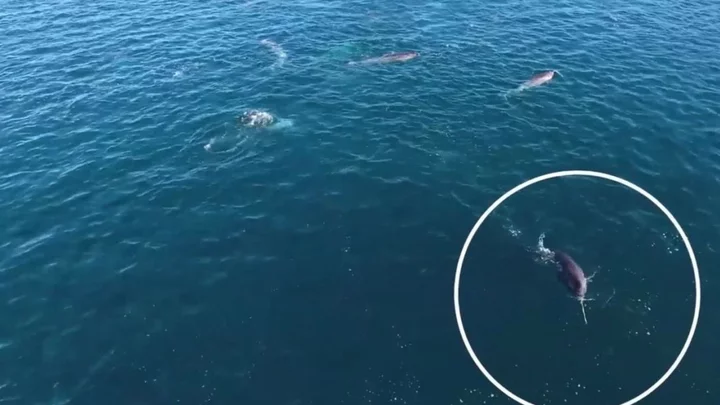
There's a sinister reason why you never see narwhals in aquariums
Narwhals are among the most elusive creatures in the ocean, with their long, spiralling tusks giving them an almost mythological quality. And whilst many people would pay good money to see these unicorns of the sea in the flesh, they are notably absent from the world’s aquariums. The reason for this is both dark and mysterious, since there have only been two attempts to keep the toothed whales in captivity. Both of these ended in tragedy and the general acceptance that narwhals simply don’t belong in our sealife centres. The legendary porpoises, which are related to belugas and orcas, are found in Arctic coastal waters and rivers. They have two teeth and, in males, the more prominent of these grows into the swordlike tusk which can be up to 10 feet long, according to National Geographic. Back in 1969, Coney Island’s New York Aquarium becoming the first-ever centre to put a narwhal on display. According to IFL Science, the aquarium became home to a young calf called Umiak, whose name referred to the canoe used to hunt the species in the High Arctic. It was captured by members of the Inuit community who said that it followed their canoe back to camp after they killed its mother for meat. Umiak was put in a tank alongside a female “white whale” (most likely a beluga), who acted as its stepmother. And although staff reportedly fed vast quantities of milk mixed with chopped clams to keep it happy, they weren’t able to keep it healthy. Less than a year after Umiak arrived at the centre, the orphaned narwhal died of pneumonia, as reported by The New York Times at the time. Still, the animal’s swift and tragic demise didn’t stop Canada’s Vancouver Aquarium from attempting the same feat in 1970. The aquarium had been gearing up to host a narwhal since 1968, when its director, Murray Newman, hoped that bringing narwhals to the city could generate interest in the species and help with its conservation, IFL Science reports. After two unsuccessful attempts to capture one of the whales themselves, Newman and his team were forced to buy a young male from a community of Inuit hunters based in Grise Fiord on Canada’s Ellesmere Island. The animal was reportedly called Keela Luguk – a phonetic spelling of the word “qilalugaq”, which means “narwhal” in some Inuktitut dialects. Within a week of Keela Luguk’s arrival at Vancouver Aquarium in August 1970, the centre had caught two female narwhals and three calves, which were then added to his tank. However, in less than a month, the three calves had died. And by November, the two females were also gone. As public outrage mounted, the mayor of Vancouver himself called for Keela Luguk to be returned to the wild. But Newman would not succumb to their pressure and, eventually, on 26 December that same year, the young whale was reported to have died too. It’s not known exactly why the narwhals fared so dismally in captivity, particularly given that the species’s closest relative, the beluga, can survive a number of years, or even decades, in aquarium facilities. However, the porpoises are known to be exceptionally sensitive animals, with studies finding that they are so affected by human-made noises that even the sound of a ship sailing near their habitat is enough to radically impact their behaviour. Fortunately, aquariums seem to have got the memo, and narwhals have largely been left to continue their lives as fabled enigmas of the sea. Sign up for our free Indy100 weekly newsletter Have your say in our news democracy. Click the upvote icon at the top of the page to help raise this article through the indy100 rankings.
2023-10-02 19:29

The Best Dell Laptops for 2023
If you're shopping for a laptop in 2023, you have almost too many options to
2023-09-06 08:48
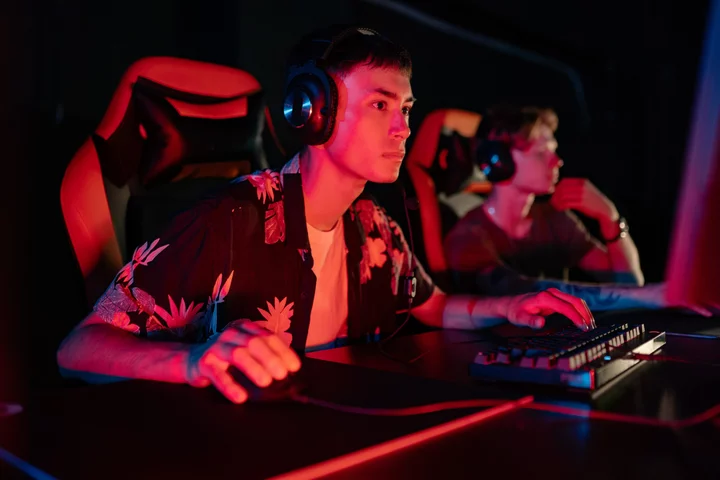
The best gaming PCs for a next-level experience
This content originally appeared on Mashable for a US audience and has been adapted for
2023-09-21 19:50
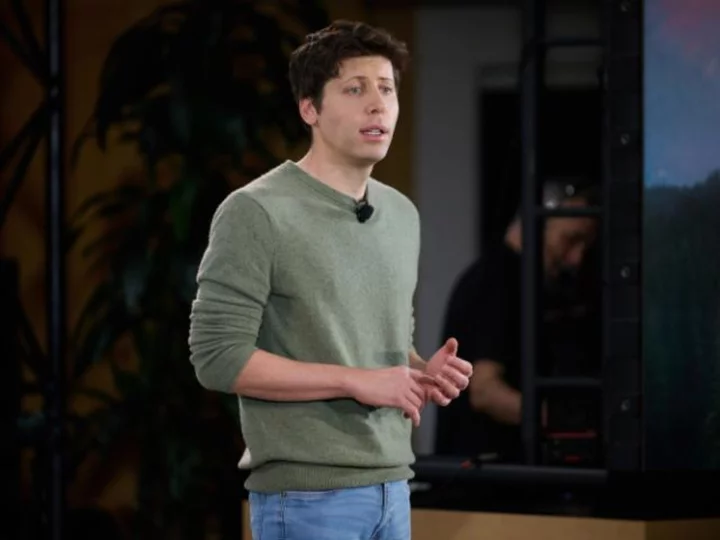
OpenAI CEO Sam Altman to testify before Congress
OpenAI CEO Sam Altman will testify before Congress next Tuesday as lawmakers increasingly scrutinize the risks and benefits of artificial intelligence, according to a Senate Judiciary subcommittee.
2023-05-10 23:55
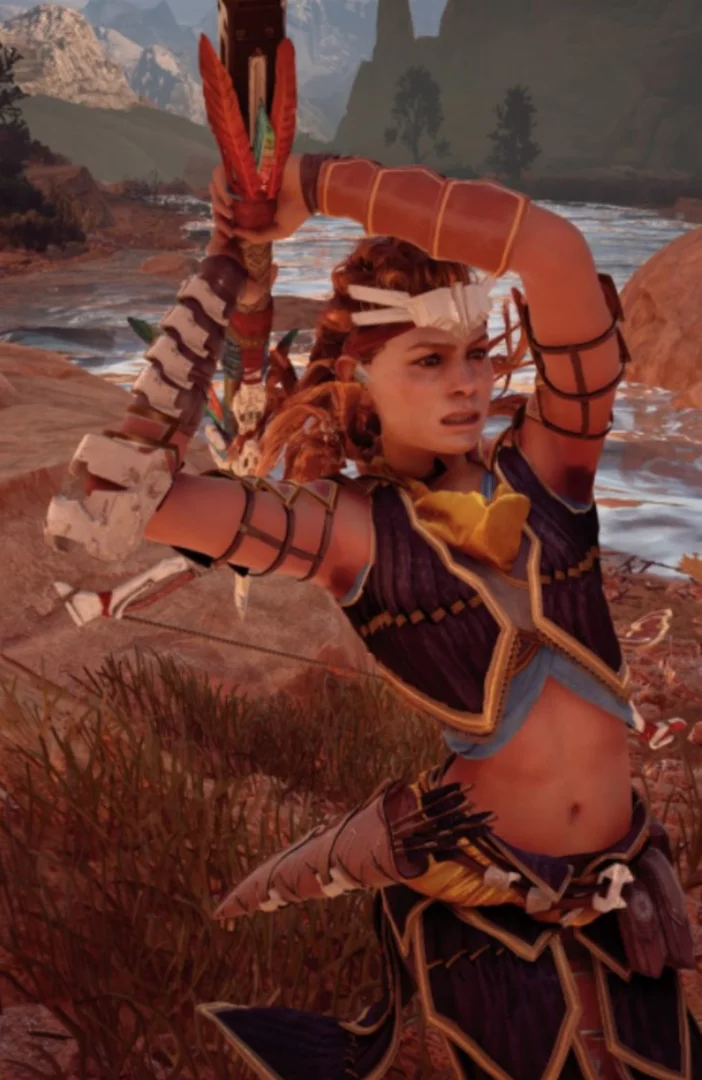
Horizon Zero Dawn board game announced as prequel to Horizon Forbidden West
'Horizon Forbidden West: Seeds of Rebellion' will prove useful for those wanting to progress to Horizon 'Forbidden West'.
2023-09-21 19:15

Chatbots ‘able to outperform most humans at creative thinking task’
Bots such as ChatGPT may be able to outperform humans at certain creative thinking tasks, scientists believe. Researchers have found that artificial intelligence (AI) chatbots are capable of a skill known as divergent thinking – a spontaneous thought process or method used to generate creative ideas by exploring many possible solutions. When assessed with a type of divergent thinking exercise known as alternate uses tasks, which asks a person to think of as many uses as possible for a simple object, chatbots, on average, performed better than humans. However, the researchers also found that the best human ideas still matched or exceeded those that came from AI. Simone Grassini, associate professor in the department of psychosocial science at the University of Bergen, and Cognitive and Behavioural Neuroscience Lab at the University of Stavanger, in Norway, told the PA news agency: “Indeed, this is a remarkable type of ability that AI chatbots display. “The findings show that AI is better than most humans in creative thinking. The findings show that AI is better than most humans in creative thinking Prof Simone Grassini “But we should also remember that we used the divergent thinking task to measure creative thinking, that is, measuring a particular type of creative thinking and not creativity in general. “Our results show that, at least for now, the best humans still outperform the AI.” For the study, published in the journal Scientific Reports, Prof Grassini and her colleague Mika Koivisto, of the department of psychology at the University of Turku, in Turku, Finland, assigned alternate uses tasks for four objects – a rope, a box, a pencil and a candle – to 256 human volunteers and three AI chatbots – ChatGPT3, ChatGPT4, and Copy.Ai. The responses were rated on semantic distance – looking at how closely related the response was to the object’s original use – and creativity. The team said that on average, chatbot-generated responses scored significantly higher than the human responses for both semantic distance and creativity. The best human response outperformed each chatbot’s best response in seven out of eight scoring categories – however responses from people had a higher proportion of poor-quality ideas, the researchers added. Prof Grassini said: “Playing around with ChatGPT, I noticed that some of the answers given by the chatbot displayed a good level of creativity. “I knew that the chatbot would have performed well, but I think it performed even better than what I expected.” The researchers said that while their work highlights the potential of AI as a tool to enhance creativity, it also underscores the unique and complex nature of human creativity that may be difficult to fully replicate or surpass with AI technology. Prof Grassini said: “It is still to be established whether these capabilities of AI will translate directly on AI systems, replacing human jobs that require creative thinking. “I prefer to think that AI will be helping humans to improve their capacity.” Read More Charity boss speaks out over ‘traumatic’ encounter with royal aide Ukraine war’s heaviest fight rages in east - follow live Information Commissioner urges people to share data to protect at-risk children Long-form video content is here to stay, says YouTube UK boss Robotic dog brought into survey historic Cold War weapons testing facilities
2023-09-14 23:26

Moore’s McIntyre to Lead Venture Firm With Daily Mail Backing
Louis Bacon’s Moore Capital Management and the publisher of British tabloid the Daily Mail are launching a new
2023-12-01 08:52

Malaysia Expects Dry Weather to Be Worse Than in Recent Years
Malaysia may experience drier weather than in recent years during the ongoing Southwest Monsoon season that’s set to
2023-05-19 12:20

ChatGPT, Google Bard produce free Windows 11 keys
ChatGPT can generate Windows keys for free, a Twitter user discovered. Last Friday, @immasiddtweets tweeted
2023-06-19 23:47
Former Slack and Dropbox Executive Johann Butting Joins Mentimeter’s Board of Directors
TORONTO & STOCKHOLM--(BUSINESS WIRE)--May 31, 2023--
2023-05-31 21:26

What to Do When Your Computer Screen Won't Show a Picture
Your coffee is brewed. Your mind is sharp. You go to turn on your computer,
2023-08-03 22:53
You Might Like...

Gravity Launches New Roguelike Game ‘Wetory’ in Early Access

Data of 237,000 US government employees breached

How to watch the UCI Cycling World Championships 2023 for free

Skyflow Radically Simplifies Data Residency

How to Get Dune Sardaukar Operator in Warzone

Canada wildfire evacuees can't get news media on Facebook and Instagram. Some find workarounds

Paige Spiranac tempts Robby Berger and followers by indulging in hot dog and Snickers bar

Major finding on Saturn’s moon Enceladus boosts hope for finding alien life in our solar system