Musk’s Lawyer Sends Letter to Microsoft on Twitter Data Misuse
Elon Musk’s top outside attorney sent Microsoft Corp. Chief Executive Officer Satya Nadella a letter Thursday, saying Microsoft
2023-05-19 11:50
How to Get Eminem Marshall Magma Skin for Free in Fortnite
To get the Eminem Marshall Magma skin for free in Fortnite, players must purchase the Marshall Never More skin and then attend the Eminem concert on Dec. 2.
2023-12-01 04:48
CDL Major 5: 3 Storylines to Follow
Call of Duty League Major 5 kicks off on May 25 with matches that will determine which teams make it to CDL Champs 2023.
2023-05-25 01:53
How to take the perfect picture of the supermoon
The April 2020 supermoon will be the biggest and brightest of 2020 as its elliptical orbit brings it closer to the Earth in more than a year. On 7-8 April, the full moon will reach as close as 356,907km (221,772 miles), and will appear most impressive at moonrise on Tuesday and moonset on Wednesday. Clear skies in the UK, combined with unusually low air pollution due to the coronavirus lockdown, make it one of the best opportunities in years to view the rare celestial phenomenon. Here’s how to take the perfect picture of it: Use a landmark to get perspective Everyone will be taking pictures of the supermoon by itself, but some of the best pictures show the moon next to a land mark or trees and houses, which is what helps to give the picture “a sense of place”, says Nasa’s senior photographer, Bill Ingalls. “Think of how to be creative – that means tying it into some land-based object. It can be a local landmark or anything to give your photo a sense of place.” Pick the best spot Location isn’t everything, but it can definitely help with getting a perfect picture of the supermoon if you have time to plan it. You can look up the best monuments or statues in your area to photograph the image of the moon against, like Mr Ingalls does in Washington D.C., where he lives. “It means doing a lot of homework. I use Google Maps and other apps – even a compass – to plan where to get just the right angle at the right time,” he told Nasa. Use an app to find the moon Unless you're an astronomer, the best way to know where the moon will rise or set is to use a app on your smartphone to locate it. There are several free or cheap options you can choose from, each using your phone's inbuilt accelerometer to know which way you're facing. The apps can also tell you what phase the moon is in, while some even give other celestial details, like the location of planets and star constellations. Decent options for iOS and Android devices include Star Chart, Sky Safari and Skyview. Get the right exposure If you’re using a camera where you can control the shutter speed, don’t go for a long exposure even though the picture will be taken in low light, National Geographic photographer Mark Thiessen told the magazine, as it will lose any chance of capturing lunar detail and make the moon itself appear too bright. If you’re taking a picture on your camera, control the light balance by first tapping the screen where the moon appears to get the camera to focus on the object before dragging your finger up and down to play with the exposure. “You’ll usually want to drag it down for underexposure to be sure you have all the highlight detail,” National Geographic photographer Michael Christopher Brown said. Use a tripod for your camera or rest your phone on a solid surface David Reneke, an astronomer and writer for Australian science magazine told ABC.net that if you’re using an SLR or DSLR then it’s important to play with aperture settings on your camera to photograph the supermoon, but that using a tripod is essential. It’s worth using a tripod for taking pictures with a smartphone too, as any camera shake can compromise the quality of the pictures – but if you don’t have one to hand you can simply rest your phone on a window ledge. For older smartphones that use a digital zoom rather than an optical zoom, it’s generally best not to use the zoom as it could compromise the quality of the image. Instead, take the picture and then crop it. Newer phones like the Huawei P30 and P40 series feature incredible zoom capabilities that can take detailed pictures of far away objects. Other cameras come with special features to improve pictures of the night sky, such as the Google Pixel 4’s Astro mode. Read More How to take the perfect picture of tonight's supermoon Hundreds of years after it was discovered, one material could change the world Kanye West allowed back on Twitter following his ban over antisemitic conspiracies Hundreds of years after it was discovered, one material could change the world Kanye West allowed back on Twitter following his ban over antisemitic conspiracies As Twitter becomes X - Seven disastrous rebrands from Royal Mail to New Coke
2023-07-31 16:19
New invention could herald ‘battery revolution’, scientists say
Researchers have invented a new battery that they claim could have profound implications for the future of energy storage and renewable technologies. The lithium-based redox-flow battery, developed by a team at the University of Cincinnati, could prove crucial for wind and solar operations, where large-scale batteries are needed to store energy during times of overproduction and release it when production drops off. “Energy generation and energy consumption is always mismatched,” said Jimmy Jiang, who led the research at the University of Cincinnati. “That’s why it’s important to have a device that can store that energy temporarily and release it when it’s needed.” The novel design removes the membrane that separates the positive and negative sides of the battery, which is one of the most expensive parts of this type of battery and has previously hindered development. The membrane-free battery exhibited high voltage and energy density that could potentially meet the demands of large-scale green energy operations at an economically viable cost for the first time. “This design significantly decreases material costs,” said Soumalya Sinha, a visiting professor at the University of Cincinnati who was involved in the research. “We’re trying to achieve the same performance at a cheaper cost.” The team has submitted patent applications for the design, which Dr Jiang said will herald a “battery revolution” within the next 20 years. “I am confident about that,” he said. “There is a lot of intense research going into pushing the boundaries of battery performance.” The research was detailed in a paper, titled ‘Development of high-voltage and high-energy membrane-free nonaqueous lithium-based organic redox flow batteries’, published in the journal Nature Communications. Read More Volcano discovery could power electric cars for decades, scientists say
2023-09-12 03:46
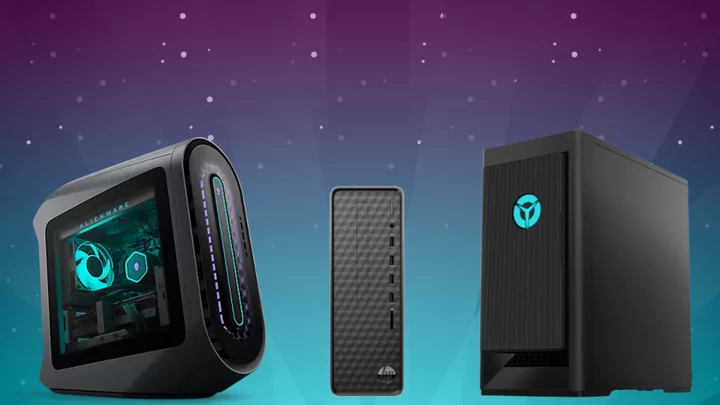
Grab a deeply discounted laptop or PC at Lenovo's Memorial Day sale
With grad season and Father's Day ahead of us, now is the time to upgrade
2023-05-25 00:47
Hytera Releases Ruggedized Push-to-talk Smartphone
SHENZHEN, China--(BUSINESS WIRE)--May 17, 2023--
2023-05-17 21:20
Apple’s ‘mixed reality’ headset: What could the future look like through new VR glasses?
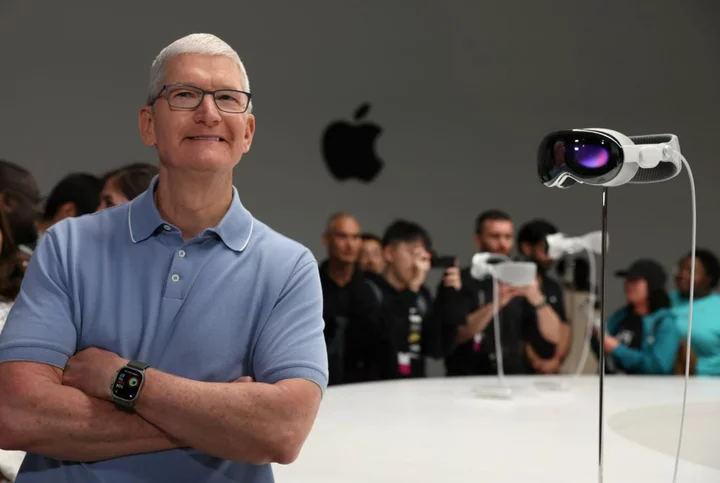
In a couple of weeks, at its annual Worldwide Developers Conference, Apple could be set to reveal one of its most important and risky products ever: a whole new way of seeing the world. The “mixed reality” headset is still a secret and a mystery. Though it has been strongly rumoured, it still might never arrive; it would certainly not be a surprise if it did not turn up at that WWDC event, though it would be something of a disappointment given how many whispers there have been. But whether it arrives now, later or never, Apple’s headset has been in the works for years. And clues to what it might look like – or what the world might look like through it – are already sprinkled through the company’s other products and apps. Rumours of how the headset will look have suggested it might be something like ski goggles, with cameras mounted on the outside and a precise screen on the inside, borrowing some of the design language of the Apple Watch; eventually, that is expected to morph into something less like a virtual reality headset, and more like glasses with a screen that will blend into normal life. We have a lot of clues about what the mixed reality experiences that Apple wants people to see through it will look like. That’s because Apple and its executives have frequently discussed the uses of augmented reality in public, even as the hardware has stayed a tightly protected secret. Apple’s work on a kind of headset is thought to have been ongoing since 2016, though what exactly that headset was rumoured to be has shifted over the years. The main rumours have coalesced since then into work on a “mixed reality” headset: something that would use cameras to show a picture of the real world inside a headset strapped to users face, and sensors and software to overlay virtual objects on that real world. In 2017, Tim Cook spoke to The Independentabout the importance of augmented reality. At that point, he was talking primarily about the iPhone and iPad, and how their cameras, sensors and screens could be used to layer virtual objects on top of the real world. It was clear even then that Apple really planned to include it in some sort of glasses or goggles, however. Asked at the time, Mr Cook pointed to “rumours and stuff about companies working on those” and declined to discuss Apple’s plans, but he said that the “technology itself doesn’t exist to do [devoted hardware] in a quality way”. “The display technology required, as well as putting enough stuff around your face – there’s huge challenges with that,” he said then. “The field of view, the quality of the display itself, it’s not there yet,” he added, saying that Apple doesn’t “give a rat’s about being first” and would not launch anything until it was satisfied. In the time since, Apple has seemingly been working very hard to get satisfied with that technology. It appears to be paying off: last week, virtual reality pioneer Palmer Luckey, who created Oculus and then sold it to Meta, suggested that he had seen an early version of the headset and that it was “so good”. Morsels of unclear and uncertain information like that are all we have to go on about the headset, which has not really been leaked in any definitive form even as rumours suggest it is just weeks from launch. But if the hardware is unknown, Apple’s plans are not so mysterious. That is because Apple may already have been quietly planning for the metaverse – or something like it, given that the company may be unlikely to adopt a term that has been soured both by the mixed reaction to “Web 3.0” and Facebook’s attempt to co-opt it by changing its name to Meta and re-orienting the company around it. Apple will probably avoid much of that branding, since it has quickly become attached to a kind of hype and boosterism that it tends not to associate itself with. It also usually likes to make up its own terms – and recent trademarks have included filings for “xrOS”, which may be the branding for the operating system that powers the headset. But those early experiments in the metaverse do already show some of the ways that Apple might be imagining us interacting with its new headset. The most obvious comparison is with the Oculus headsets that are now developed by Meta. Those have focused more on virtual reality than augmented reality; Meta has been interested in creating whole new digital worlds, rather than overlaying virtual objects on the real world, like Apple seems to be interested in. But the use cases may be the same, and Meta has focused on applications such as business meetings, where people can sit around a real table and discuss things, as well as VR games such as the hugely popular Beat Saber, where people try and strike objects with a sword in time to a beat. Apple has in recent years been more focused on the quality of interactions with devices, and has actually encouraged users to spend less time on their devices and more time being active. As such, it might not opt for mixed reality experiences that leave people cooped up inside the headset, and might instead be more outward-looking. As such, Apple might still focus on meetings, but would presumably use its augmented reality technology to add virtual people onto real rooms, rather than stuffing them in computer-designed spaces. And it might focus more on people’s interactions with the real environment by, for instance, allowing people to see their messages or directions as they move around, a version of which is already experienced by people who wear the Apple Watch. Apple has already offered a host of technologies aimed at making it easier for developers to include augmented reality in their iPhone and iPad apps. In 2017, when Cook made those tantalising comments about a possible headset, he was actually showing off uses of those frameworks: in the app Night Sky, for instance, which overlays virtual images of the constellations on top of real camera views of the stars. The company makes that technology possible with a range of systems, in both its hardware and software. That hardware includes the cameras, of course, but also the LiDAR sensor in some iPhones and iPads that allows for precise scanning of the environment; the software is most obvious in the form of ARKit, which does the heavy lifting of understanding the world around a user so that developers can just place their virtual objects into it. Since then, developers such as Ikea have used that to offer the option to drop virtual furniture into a real room to see how it might fit, for instance. Other apps such as 3D Scanner harness those sensors to allow people to easily create virtual views of those rooms as if they are in a video game. But the most telling way of guessing what Apple’s plans for the headset are can be found in its own technology. Apple has been quietly creating a whole world of apps that appear to be ready for mixed reality, hidden in plain view. One of them is Memoji, which are cartoon versions of people that can be used as stickers to react to messages or as profile pictures within messages. Apple has leaned on them heavily in recent years, using them as decorations in its presentations, for instance. At the moment, they are just a fun picture. But it’s very easy to imagine how they could instantly be used as avatars for people in virtual environments. If people are to participate in virtual meetings through their headsets, then other participants in that meeting will need to appear in some form, and current versions of those environments such as Meta’s Horizon Worlds rely on cartoonish drawings of people rather than realistic depictions. Apple already has those ready to go – many iPhone owners might already have created their virtual avatar, without even realising it. Aside from meetings, one of the most discussed use cases of mixed reality is in finding directions. A person might be walking up to junction, for instance, and see a virtual signal telling them to turn left overlaid on the real road that they need to start walking down. Apple has been putting the foundations of that kind of technology in place for years. It launched Apple Maps in 2012 and in the time since has been working to integrate it with the real world: collecting detailed 3D information about the world, for instance, so that it can show accurate and precise virtual models of real buildings, and a “Look Around” tool introduced in 2019 that works like Google Street View and lets people scroll around three dimensional panoramas. At the moment, those features are used to make people’s phone navigation look nice: as you drive into a city, for instance, the 3D models of buildings shift around, to make it feel like the virtual car on your phone is really driving along. But it takes very little imagination at all to see that the real purpose of those models may be to allow Apple to have a precise understanding of the real world, so that the headset will know where it is and help its wearer. Apple has also already been working on wearable products, which might themselves offer an insight into how the headset will work. The Apple Watch and AirPods already work by attaching themselves to people’s bodies and adding a layer of digital information – which, in a way, is exactly what the headset will aim to do. The AirPods, for instance, have found a way to lightly add information on top of the real world: using Siri to read out messages as they arrive, and adding transparency modes that allow the noises of the real world in as well as the sound coming through the earphones. And the Watch may be a glimpse at how Apple will encourage people to strap a computer to their body in a way that might look alarmingly sci-fi but has become accepted as relatively normal. Apple encouraged the Watch to become an acceptable accoutrement by focusing on personalisation, and designing in a way that brought in a sense of softness that did not make the hardware seem too much like a computer – it will probably do much the same with the headset. Apple’s new products are often described as if they have been magicked up from nowhere. But in truth all of its recent innovations have had their roots in previous products: the iPhone combined an iPod and a computer, and both the iPad and Apple Watch were bigger and smaller versions of that iPhone. The same thing appears to have been happening with Apple’s headset, which might look a lot more familiar than we are expecting. When the company takes to the stage to reveal its new products in a couple of weeks, we might realise that the product Apple wants us to strap to our faces has been developed right under our noses. Read More The 20 technologies that defined the first 20 years of the 21st Century Apple Watch 7 pre-order: How to buy the new smartwatch in the UK Apple introduces new version of Watch with complete redesign iPhone 13 - live: UK contract deals and prices for Apple, EE and O2
2023-05-23 02:20
Core Scientific Announces May 2023 Production and Operations Updates
AUSTIN, Texas--(BUSINESS WIRE)--Jun 5, 2023--
2023-06-05 21:26
Reaction to Sam Altman's return as OpenAI CEO
OpenAI said on Tuesday it had reached an agreement for Sam Altman to return as CEO days after
2023-11-22 23:25
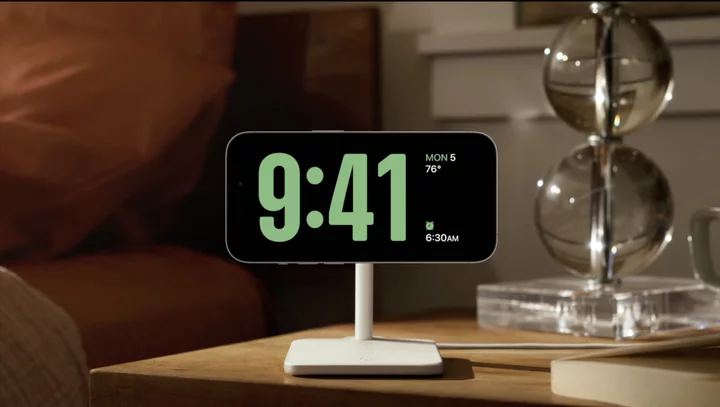
Everything you need to know from Apple’s iPhone 15 event
Here is everything you need to know about what was announced at Apple’s iPhone 15
2023-09-13 08:24
How to Get Zombie Mercy in Overwatch 2
To get Zombie Mercy in Overwatch 2, players must purchase the skin from the Hero Gallery for 1,000 Overwatch Coins or the Bundle for 1,600 Overwatch Coins.
2023-11-17 06:23
You Might Like...
Juniper Research: Digital Wallets: Ericsson, Comviva and Huawei Revealed as Market Leaders in New Juniper Research Competitor Leaderboard
Here's why xQc doesn't pay his Twitch moderators: 'It could be weird'
Best Buy just revealed plans for an Oct. savings event to rival Prime Day — here's what you need to know
New Zealand Concrete Industry Sets Emissions Reduction Target
Biden heads to North Carolina to push clean energy agenda and promote order aiding military spouses
Biden Policies Drive Smart Bets on Green Technology, Brainard Says
Alibaba CEO and Chairman Zhang to step down to focus on cloud business
The Absolute Best Steam Games for 2023