

World Series of Warzone Finals: How to Watch, Schedule
The World Series of Warzone Finals begin at 1 p.m. on July 19 and July 20. Fans can earn free rewards as they watch the WSOW Finals on Twitch.
2023-07-20 00:48
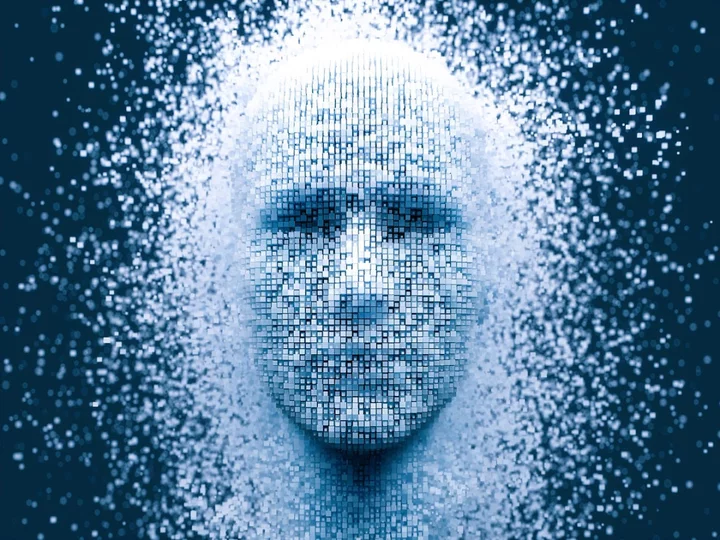
Google AI breakthrough represents huge step in finding genes that cause diseases, scientists say
Google says it has made a significant step in identifying disease-causing genes, which could help spot rare genetic disorders. A new model named AlphaMissense is able to confidently classify 89 per cent of all possible “missense” variants in genes, identifying whether they are likely to cause diseases or benign. That compares with just 0.1 per cent of all missense variants that have been confidently classified by human experts. Missense variants happen when a single letter is substituted in the DNA, which in turn leads to proteins with a different amino acid. That small change can have significant effects – Google likened it to the way that changing a letter in one word can change the meaning of the whole sentence. Most of those variants are benign: the average person has more than 9,000 of them. But some of them can be disastrous, leading to rare genetic diseases. The new AlphaMissense looked at existing information about missense variants, and how commonly they are seen in humans and closely-related primates. It looked for those that were rarely seen, classifying them as pathogenic, and from that was able to use that information to analyse other protein sequences – giving not just a verdict on whether they were likely to cause problems, but also how confident it was. Experiments, conducted by humans, which look to find those mutations are expensive and slow: they require people to examine each unique protein and designed separately. Google says that the new system means that researchers can “preview” those results for thousands of proteins at a time, helping them decide where to focus. The company has used its systems to release a vast catalogue of “missense” mutations, so that researchers can learn about what effect they have. In some cases, those variations can lead to conditions such as cystic fibrosis, sickle-cell anaemia, or cancer, and understanding them could be key to researchers studying ways to treat or prevent those diseases. It is just the latest health breakthrough from Google’s Deepmind division, which is looking to use artificial intelligence to both identify and treat a variety of conditions. The new system was built on AlphaFold, the breakthrough model that helped unfold proteins, the building blocks of life. The research is described in a new paper, ‘Accurate proteome-wide missense variant effect prediction with AlphaMissense’, published in the journal Science. The catalogue is being made “freely available to the research community”, Google said, and the company will release the code behind the AI system. Read More BBC removes some Russell Brand content as monetisation suspended on YouTube Google Bard can now link to Gmail and other apps to help with responses Long-form video content is here to stay, says YouTube UK boss
2023-09-20 00:25

St. Louis Blues Select Shift4 to Deliver Next-Gen Commerce Experience
ST. LOUIS & ALLENTOWN, Pa.--(BUSINESS WIRE)--Aug 28, 2023--
2023-08-28 20:18
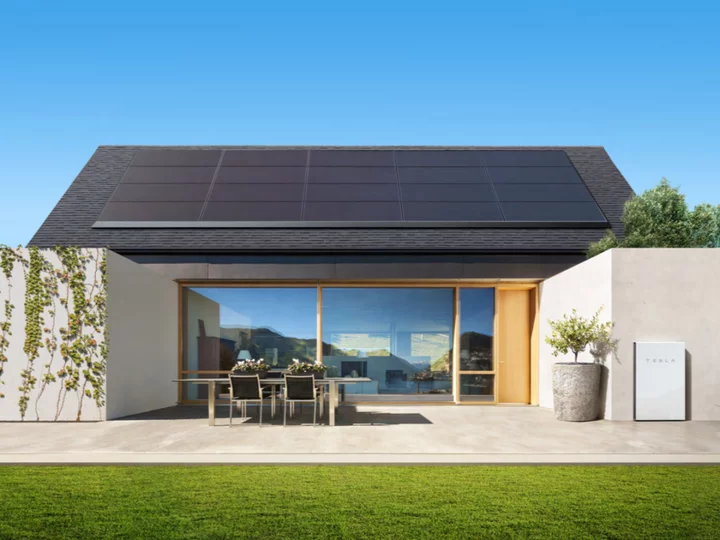
How tech could turn our homes into renewable energy power stations
In 1866, Napoleon III was presented with a solar-powered device that its inventor claimed could provide inexhaustible energy. The Emperor of France was so impressed by Augustin Mouchot’s Solar Concentrator that he granted the maths teacher funding to continue its development. The success of Mouchot’s invention – which was the size of a small house – meant solar energy started to be taken seriously as a potential alternative to coal, and scientists got to work on improving and adapting the technology for residential applications. Within a few decades, thousands of homes across the US were fitted with solar water heating systems that could heat homes, warm food and wash clothes, however the oil boom in the 20th century saw the popularity of clean energy collapse. It took until the 1973 oil crisis and soaring prices for solar to regain mainstream attention, and 50 years of technological advances later we may now be on the cusp of realising the revolutionary potential seen by the early pioneers of renewable energy. Recent breakthroughs have made solar panels both cheaper and more efficient, while researchers claim to now be close to creating commercially viable alternatives that could transform homes into fully self-sufficient power stations. These new technologies are finally making it possible to move away from traditional energy reliance, transforming the concept of living off-grid from an alternative lifestyle choice to a realistic solution for a sustainable future. So what are these new technologies, and what might a solar-powered home look like in the next few years? Photovoltaic windows The off-grid solar market is predicted to be worth $394 million by 2030, but this may be a low estimate if solar-powered windows finally break into the commercial market. Last year, a team from École Polytechnique Fédérale de Lausanne in Switzerland achieved a new efficiency record for dye-sensitised solar cells (DSCs), opening up new commercial possibilities for see-through solar panels. The transparent properties of DSCs make them suitable for use in windows, greenhouses and glass facades, offering a theoretical price/performance ratio that is capable of competing with fossil fuel electrical generation. Photovoltaic windows have already been installed in the SwissTech Convention Center, but the latest efficiency record could precede a much wider spread roll out. Solar-powered paint The Sun beams enough energy to Earth in just one hour to power the whole planet for an entire year, yet less than 10 per cent of the global electricity supply comes from solar energy. One of its limitations is that solar panels require roofs or available land – but what if it was possible to transform entire buildings into electricity generators? Scientists claim that solar paint could achieve this at a relatively low cost in the near future. The technology involves photovoltaic quantum dots that capture light and turn it into electric current. Theoretically, these dots could be 11 per cent more efficient than traditional solar panels. A longer-term prospect is spray-on solar cells that use a liquid form of the so-called miracle material perovskite, which researchers at the University of Sheffield say could be used in “practical mass applications” in the coming years. Combined with solar windows, the technology could mean that every single surface of a building that is touched by the Sun could generate power. Solar trees and battery breakthroughs There are more than a million acres of private gardens in the UK, according to the Office for National Statistics, though the space taken up by solar panels currently make them an unpopular option for most homeowners. UK startup SolarBotanic Trees is aiming to change this with a bio-inspired design that features a shaded canopy with integrated seating, heating and outlets. Speaking to The Independent earlier this month, SolarBotanic Trees chief executive Chris Shelley said the first installations are already planned in Oxford next year. “The idea is to put solar panels on a domed surface like the canopy of a tree, and then place a battery storage system in the trunk,” he said. “The trees could go in people’s gardens to supplement rooftop solar panel setups, or several of them could even meet the annual electrical requirement of a medium-sized house.” The solar trees address the need for battery systems that can continue to supply power when the Sun is not shining. Several companies already offer battery packs for homes, most notably Tesla’s Powerwall that has been installed in more than half a million homes around the world. At Tesla’s Investor Day event earlier this year, the company projected that it will take $10 trillion to achieve a “sustainable energy civilisation”, but will require less than 0.2 per cent of the Earth’s surface to achieve. Renewables expert Dr Brian Azzopardi believes the “remarkable pace” of battery and solar advances over the last few years means individuals can already reduce their dependence on energy grids and look towards a more sustainable way of living. “It has revolutionised the renewable energy sector and opened up unprecedented opportunities for individuals to become increasingly self-sufficient with their energy needs,” Dr Azzopardi, who chairs the Foundation for Innovation and Research at the Malta College of Arts, Science and Technology, tells The Independent. “As battery technologies continue to evolve, becoming more affordable and efficient, the possibility of achieving a self-sufficient lifestyle ‘off-the-grid’ becomes increasingly feasible for a wider range of people.” How long until we see off-grid solar homes on a significant scale? In the same way that some developing countries and communities skipped landlines and went straight to mobile phones, it may be communities with no access to a power grid that benefit most from the emerging technology. One startup targeting under-served markets is Zola Electric, which offers “electrical infrastructure in a box” for places without power. It involves a solar panel and battery setup capable of powering a home, with company CEO Bill Lenihan describing it as a “game-changer” for the roughly 3 billion people living without affordable or reliable energy. “Our solutions are installed in homes, businesses, schools and hospitals in 10 countries across four continents, serving over two million customers,” he told The Independent. “They deliver distributed, clean, digital energy solutions for those that need it most.” For developed countries, achieving self-sufficient living with clean energy first requires electrifying all energy – from gas stoves to fuel-powered cars. Mark Jacobson, a professor of civil and environmental engineering at Stanford University, says that recent technological advances and incentivised roll-outs mean it already makes economic sense to transform homes into renewable power stations. “Costs have declined so much in recent years, and tax credits are so abundant, that most homeowners can readily install home solar and battery systems,” Professor Jacobson, who detailed how he made the transition in his 2023 bookNo Miracles Needed: How Today’s Technology Can Save Our Climate and Clean Our Air, told The Independent. “I don’t pay any energy bills, generate 120 per cent of the electricity I consume – selling the rest back to my utility – and have paid back the entire solar plus battery system in six years. My energy is free for the next 25 years.” Read More Electric car drives for 100 hours non-stop on futuristic road Massive mineral deposit discovery could meet global battery and solar panel demand ‘for next 100 years’ Geothermal power: Clean energy beneath our feet that could help UK ditch fossil fuels ‘It’s like having your legs broken’: What it’s like to fly as a disabled traveller In the battle of authors vs robots, the entire craft of writing is at stake
2023-07-08 15:25
A major change is coming to WhatsApp
Big news for WhatsApp users who are a bit trigger happy when sending risky texts. You will now be able to edit your messages sent via the platform, within 15 minutes. "From correcting a simple misspelling to adding extra context to a message, we're excited to bring you more control over your chats," the messaging service said in a blog post on Monday. "All you need to do is long-press on a sent message and choose 'Edit' from the menu for up to fifteen minutes after," it added. Edited messages will be tagged as "edited", so recipients can see the message has been changed. Sign up to our free Indy100 weekly newsletter But they won't be able to see how the message has been edited. It comes after Twitter said it was giving its paying subscribers the ability to edit their tweets last year. Tweets can be edited a few times in the 30 minutes after posting. "Tweeting will feel more approachable and less stressful," Twitter said in a blog post at the time. "You should be able to participate in the conversation in a way that makes sense to you and we'll keep working on ways that make it feel effortless to do just that," the platform added. Have your say in our news democracy. Click the upvote icon at the top of the page to help raise this article through the indy100 rankings.
2023-05-23 20:19
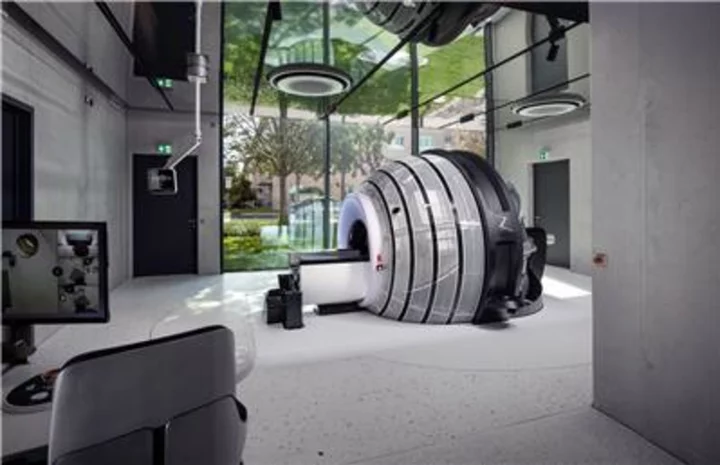
ZAP Surgical Receives National Medical Products Administration (NMPA) Approval in China
SAN CARLOS, Calif.--(BUSINESS WIRE)--Jun 29, 2023--
2023-06-29 15:58
Kraken Ordered to Turn Over Its Users’ Information to the IRS
Cryptocurrency exchange Kraken was ordered by a judge to provide a wide swath of information about its users
2023-07-01 07:49
Mass lawsuit against Apple over iPhone batteries can go ahead, London tribunal rules
LONDON Apple Inc on Wednesday lost a bid to block a mass London lawsuit accusing it of hiding
2023-11-01 22:57

Assassin's Creed: Codename Jade closed beta start date confirmed
'Assassin's Creed: Codename Jade' will launch its first closed beta next month.
2023-07-18 19:29

Gaming fans throng Seoul for League of Legends world final
Thousands of fans from around the world have descended on South Korea's capital Seoul for the League of Legends world championship final on Sunday, widely...
2023-11-18 10:55
Elon Musk reverses plan to get rid of 'light mode' on X
Twitter has gone through some drastic changes over the past week. Elon Musk renamed the
2023-07-28 23:20

U.S. officials call spy program key to big cases, but give few details
By Zeba Siddiqui SAN FRANCISCO Senior U.S. government officials warned on Tuesday of serious national security risks if
2023-06-13 17:20
You Might Like...

Get these JBL wireless earbuds for 62% off

EU officials accuse Google of antitrust violations in its ad tech business
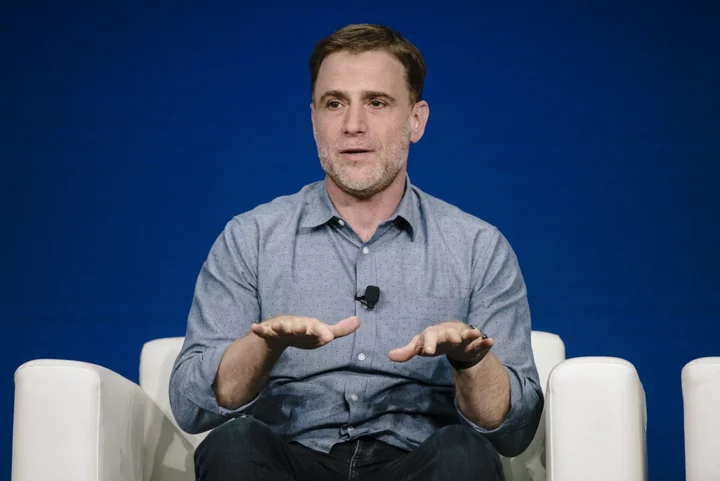
Slack Co-Founder Butterfield Sees a Turning Point for Tech

Newegg’s 2023 FantasTech Sale Begins by Offering Some of the Best Tech Deals of the Summer

AMD forecasts third-quarter revenue below estimates

xQc claps back at Pokimane for her 'sad truth about female streamers' statement: ‘More male creators getting s**t on for their looks’

ChatGPT Plus: OpenAI stops premium signups after major update

11 Fictional Bands Who Scored Very Real Hit Songs