

AI takes just five hours to design functional computer
Researchers in China have developed an artificial intelligence tool capable of designing a working computer in under five hours. The team of 19 computer scientists from five different institutions made the AI breakthrough after setting out to prove that machines can create computer chips in a similar way to humans. The feat was performed 1,000 times faster than a human team could have achieved it, the researchers claimed, marking a major step towards building self-evolving machines. “Design activity... distinguishes humanity from other animals and traditional machines, and endowing machines with design abilities at the human level or beyond has been a long-term pursuit,” the scientists wrote in a paper detailing their research. “We present a new AI approach to automatically design a central processing unit (CPU), the brain of a computer, and one of the world’s most intricate devices humanity has ever designed.” The project involved the layout of an industrial-scale RISC-V CPU, capable of running the Linux operating system and achieving an accuracy of 99.99 per cent in validation tests. The AI bypassed the manual programming and verification process of the typical design cycle, which the researchers said “consumes more than 60-80 per cent of the design time and resources” of human teams. The AI was also able to autonomously make discoveries involving computer design, uncovering something called the von Neumann architecture, first invented in 1945. The overall performance of the CPU is relatively modest compared to modern computers, with the researchers saying it can perform at a similar level to a 1991 Intel 80486SX CPU. Developing the AI approach, however, has the potential to “reform the semiconductor industry by significantly reducing the design cycle”, the researchers said. The research is detailed in a study, titled ‘Pushing the limits of machine design: Automated CPU design with AI’. Leading AI chip maker Nvidia has previously used artificial intelligence to optimise its computer chip designs, publishing a new approach to AI-powered chip design in March that could significantly improve the cost and performance of CPUs. Read More 10 ways AI will change the world – from curing cancer to wiping out humanity Harvard’s new computer science teacher is a chatbot Google’s DeepMind unveils AI robot that can teach itself unsupervised Robots can now learn new skills like picking up knives by watching YouTube videos
2023-07-04 22:23
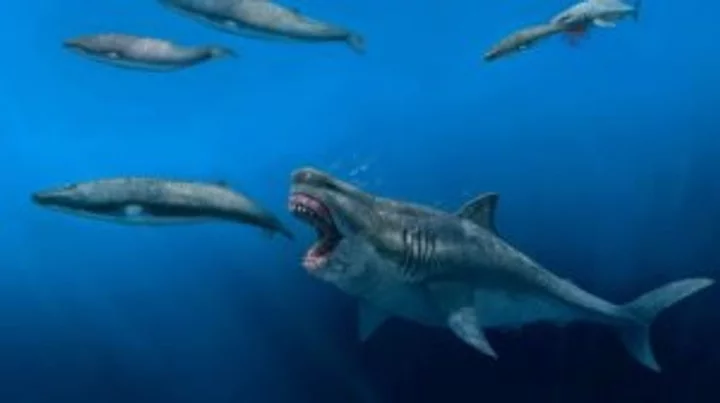
Scientists discover that megaladon's went extinct because of themselves
Scientists believe they have discovered the cause of the megalodon's extinction – and no, it’s not Jason Statham. Experts have been conducting research on fossils of teeth from the biggest species of shark the world has ever seen, which went extinct around 3.6 million years ago and measured at least 15 metres long. Research published in the journal Proceedings of the National Academy of Sciences explains that the animal was actually partially warm-blooded. Unlike most cold-blood sharks, the body temperature is thought to have been around 27 degrees. The temperature is higher than the sea temperatures around the time. Sign up to our free Indy100 weekly newsletter Study co author Robert Eagle, who is professor of marine science and geobiology at UCLA, said [via CNN]: “We found that O. megalodon had body temperatures significantly elevated compared to other sharks, consistent with it having a degree of internal heat production as modern warm-blooded (endothermic) animals do.” They were able to prove that the animals were warm-blooded by analysing how carbon-13 and oxygen-18 isotopes were closely bonded together in the fossilised teeth. Senior study author Kenshu Shimada is a paleobiologist at DePaul University in Chicago, who said: “A large body promotes efficiency in prey capture with wider spatial coverage, but it requires a lot of energy to maintain. “We know that Megalodon had gigantic cutting teeth used for feeding on marine mammals, such as cetaceans and pinnipeds, based on the fossil record. The new study is consistent with the idea that the evolution of warm-bloodedness was a gateway for the gigantism in Megalodon to keep up with the high metabolic demand.” The fact it was warm-blooded means that regulating body temperature could have been the cause of its eventual demise. The Earth was cooling when the animal went extinct, which could have been a critical factor. “The fact that Megalodon disappeared suggests the likely vulnerability of being warm-blooded because warm-bloodedness requires constant food intake to sustain high metabolism,” Shimada said. “Possibly, there was a shift in the marine ecosystem due to the climatic cooling,” causing the sea level to drop, altering the habitats of the populations of the types of food megalodon fed on such as marine mammals and leading to its extinction. “One of the big implications for this work is that it highlights the vulnerability of large apex predators, such the modern great white shark, to climate change given similarities in their biology with megalodon,” said lead study author Michael Griffiths, professor of environmental science, geochemist and paleoclimatologist at William Paterson University. Have your say in our news democracy. Click the upvote icon at the top of the page to help raise this article through the indy100 rankings.
2023-07-04 21:54

Apple loses London appeal in 4G patent dispute with Optis
LONDON Apple Inc infringed two telecommunications patents used in devices including iPhones and iPads, London's Court of Appeal
2023-07-04 21:45

Lay vs. Lie: When to Use Each
The ‘laying vs. lying’ situation is tricky—but direct objects can help.
2023-07-04 21:29

South Africa approves Microsoft's Activision Blizzard merger
South Africa is the latest country to approve of the deal.
2023-07-04 21:25

Much-delayed Just Cause: Mobile culled
Square Enix has killed 'Just Cause: Mobile' but a fifth game in the franchise is in development
2023-07-04 21:20

Overwatch 2's paid story missions a few seasons off yet
The story missions won't be coming for a while yet.
2023-07-04 21:18

5 things you need to know about Mark Zuckerberg's Twitter-killer 'Threads'
Instagram's 'Threads' will officially launch on July 6 and is a direct competitor for Twitter's userbase
2023-07-04 21:17
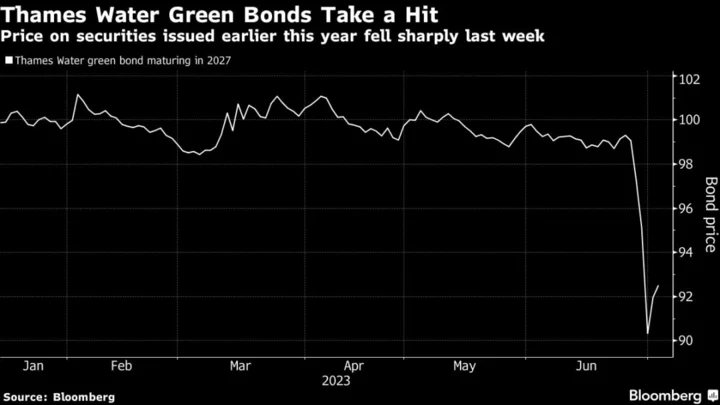
Thames Water Rocks ESG Funds With Sewage-Tainted Green Bonds
ESG funds that piled into green bonds sold by Thames Water Plc are now trying to figure out
2023-07-04 21:15

Dexcom G7 Receives Health Canada Approval: Next-Generation Continuous Glucose Monitoring System With Unmatched Accuracy Coming to Canadians
BURNABY, British Columbia--(BUSINESS WIRE)--Jul 4, 2023--
2023-07-04 20:55

AI is already linked to layoffs in a surprising industry
Many have raised alarms about the potential for artificial intelligence to displace jobs in the years ahead, but it's already causing upheaval in one surprising industry where workers once seemed invincible: tech.
2023-07-04 20:50

BYD Picks Brazil for Its First Electric-Vehicle Hub Outside Asia
BYD Co. will invest 3 billion reais ($624 million) in Brazil to build its first electric-car plant outside
2023-07-04 20:50
You Might Like...

Elon Musk just revealed that Twitter is losing money fast thanks to advertising drop

RobotLAB Expands “AI, Robotics & the Future of Work” Lineup

Justin Jefferson had a perfect and ultimate relatable reaction to 99 Madden rating

8x8 Appoints Contact Center and Growth Marketing Leader Bruno Bertini as Chief Marketing Officer

Hyperfine, Inc. Announces Promotion of Tom Teisseyre, Ph.D. to Chief Operating Officer

Health Tech Firm Enlitic Eyes Australian Listing, AFR Reports

AI Data-Center Boom Will Spur Energy Crisis, Chip CEO Warns

China Tech Overseer Plans Computing Power Push to Back AI Boom