
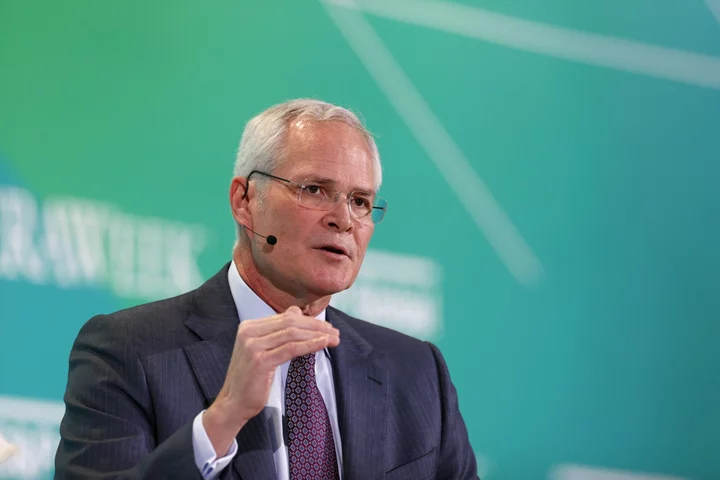
Exxon CEO Tells Europe to Follow US Approach to Climate Action
European leaders looking to tackle climate change should look to US policy and “let the market work” to
2023-06-07 12:20
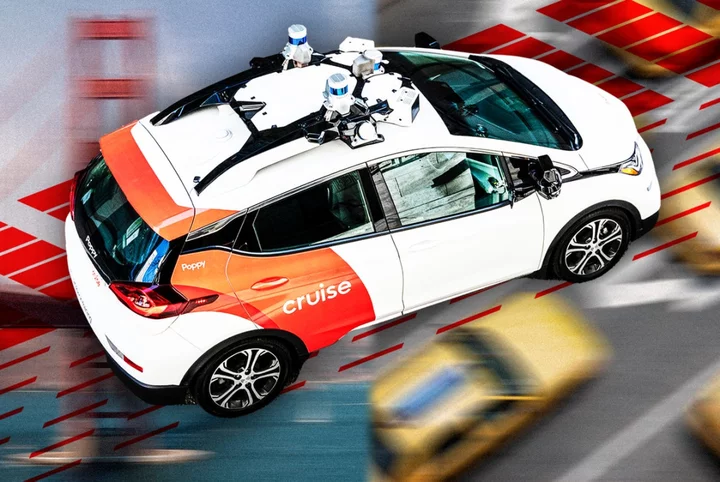
How a vote to empower autonomous ‘robotaxis’ from Cruise and Waymo has divided San Francisco
The future was waiting outside my door, and it was an electric taxi named Saxophone. On Wednesday, 9 August, on the eve of a much-watched vote to expand the footprint of autonomous vehicles (AV) in San Francisco, I summoned a driverless taxi from the company Cruise for a test drive. The Cruise AVs, which began operating paid, Uber-like on-demand rides in June of 2022, are a frequent sight in my San Francisco neighbourhood, The Richmond. And they’re about to get even more ubiquitous: on Thursday evening, following a marathon seven-hour public comment session, the California Public Utilities Commission (CPUC) voted 3-1 to allow Cruise and Google parent company Alphabet’s Waymo venture to run paid rides, without a safety driver in the cabin, 24/7 on San Francisco streets. Much like the members of the public who turned out in droves to comment on the vote, I have mixed feelings about autonomous vehicles. I’ve been trailed, somewhat ominously, on backstreets by a Cruise AV as I rode my bike, with the robo-driver declining to pass me like most human pilots would. I’ve seen a homeless man approach the window of a robotaxi to ask for change, only to find no one inside, a metaphor of San Francisco inequality a bit too on the nose even for a writer like me. I decided, for the time being, to leave the public debating to the local officials and longtime San Francisco residents and start with the basics: what was it like to ride in one of these things? For a 0.8 mile, one-way ride to the local grocery store, I was charged $8.26, about a dollar per minute of driving time. The ride was smooth, though the Cruise AV would occasionally move in a way that was, while perfectly safe, not quite human, gliding without hesitation within inches of a parked SUV’s bike rack, hesitating ever-so-slightly within the normally smooth arc of a turn, accelerating with an almost imperceptible stutter after it dropped me off. Still, I was lucky. Earlier this month, an NBC reporter taking a test drive was stuck inside a Cruise that mysteriously stalled, then blocked two lanes of traffic as it idled at a 45 degree angle against the median. After I got home, driven by “Flora,” I looked it up and the price of my roundtrip was virtually identical to that of an Uber. I sat there thinking about the strange economics of 2023 San Francisco, where the product of billions of dollars of investment had delivered a service that was both an incredible technical leap, the stuff of the Jetsons, that also offered me no financial advantage, snatched a job from a rideshare driver, and took me on a round trip that would’ve been 15 minutes faster – and free – on a rusty old bike. The future had arrived, but was it one that I, or San Francisco, really wanted, let alone needed? Wednesday’s vote exposed how deeply divisive such technologies are in San Francisco, and the thorny considerations inherent in any attempt to carry out large-scale changes to the transit system. Human drivers are unsafe death machines themselves, killing thousands of people each year. And the need for green mass transit has never been higher. But are autonomous vehicles the best solution? The companies, at least, celebrated the decision as heralding a moment of great progress. “Offering a commercial, 24/7 driverless ridehail service across San Francisco is a historic industry milestone – putting Cruise in a position to compete with traditional ridehail, and challenge an unsafe, inaccessible transportation status quo,” Prashanthi Raman of Cruise said in a statement to The Independent. It was indeed major victory for the industry, though regulators warn there’s still much work to be done before autonomous vehicles flood the roads. “The conversation on how best to integrate AVs into our community is far from over,” said CPUC president Alice Busching Reynolds, who voted for the expansion. One commissioner, Genevieve Shiroma, wasn’t yet convinced, and argued the industry hasn’t given good enough data and has been too quick to brush off reports of driverless vehicles behaving strangely around first responders. “Imagine if one of those so-called anecdotes involved a member of your family in need of urgent medical attention, or was trapped in a burning building,” she said, adding, “All it takes is one real-life example.” Outside of the Public Utilities Commission building, protesters rallied and drew messages like ‘people not profits’ in chalk on the sidewalk, as AV company employees showed out in matching t-shirts. Inside, commissioners heard a mosaic of different opinions. “We are in desperate need of people coming to San Francisco,” Matthew Sutter, who has been driving a taxi cab for 31 years, told the commission. “You’re going to take away jobs with this thing.” Meanwhile, a man named Michael Martinez said expanding Cruise and Waymo’s footprint in San Francisco would mean the city, already one of the most expensive and unequal places to live in America, was “pimped out by yet another couple of large tech companies so that all their employees here wearing yellow shirts might get to cash out their stock options.” Numerous advocates pointed out how driverless cars could discriminate against disabled people, given that they sometimes drop people a few doors down from their chosen destination, and they don’t have drivers who are able to help people with wheelchairs or other mobility aides enter and exit a vehicle. A taxi driver can help someone carry their groceries to a front door, but an AV can only go from place to place. Others argued the technologies would in fact help disabled people, overcoming the “last mile problem” of public transit, when passengers aren’t able to get all the way to their destination, and that AVs would limit dangerous human errors like distracted driving. “Too often, patients don’t make it to my operating room because they have been killed by distracted drivers or road rage,” an orthopedic surgeon testified. A representative for Mothers Against Drunk Driving said Cruise and Waymo could be a “pillar” of stopping the “100 per cent preventable crimes” of drunk driving deaths. Robotaxis began operating paid taxi services in San Francisco in June of 2022, and since then, hundreds of Cruise and Waymo vehicles have filled the streets. The city, synonymous with Silicon Valley technology and innovation, is seen as the most important test yet of AV technology, a high-profile audition for a future of mass, autonomous transit. “Operating robotaxis in SF has become a litmus test for business viability,” Cruise CEO Kyle Vogt wrote on X in April. “If it can work here, there’s little doubt it can work just about everywhere.” So far, the experience has been mixed, with a fleet of up to 400 autonomous taxis carrying out thousands of successful rides – and enraging some local residents and city officials, who say the robotaxis carry out bizarre and unsafe behaviour on a regular basis with little accountability. On 21 January, San Francisco firefighters were battling a blaze on Hayes Street when they saw a driverless taxi from Cruise gliding towards them. The Cruise vehicle, a modified electric Chevrolet Bolt, was heading straight for their hoses. The firefighters made attempts to stop the vehicle, but couldn’t. First responders were only able to halt the car once they shattered its window, according to a letter from city officials. Local transit activists say Cruise and Waymo vehicles can be seen creeping creepily towards pedestrians on sidewalks, blocking buses, and getting in the way of first responders. “I’ve seen them not totally stop at a stop sign,” an activist with the local transit group Safe Street Rebel, who asked to remain anonymous, told The Independent. “I’ve seen them get too close to pedestrians. I personally have felt very unsafe crossing the road whenever there is one stopped. I see them stalled on the streets, too. I just saw that the other day one stalled, blocking an emergency vehicle. This is something that they just do on their own.” The group has carried “cone-ing” protests, placing traffic cones on top of empty AVs to temporarily stall them. According to data Cruise shared with CPUC earlier this week, between January and mid-July of 2023, Cruise AVs temporarily malfunctioned or shut down 177 times and required recovery, 26 of which such incidents occurred with a passenger inside, while Waymo recorded 58 such events in a similar time frame. Meanwhile, according to the San Francisco Municipal Transit Agency (SFMTA), between April 2022 and April 2023, Cruise and Waymo vehicles have been involved in over 300 incidents of irregular driving including unexpected stops and collisions, while the San Francisco Fire Department says AVs have interfered 55 times in their work in 2023. Last year, Cruise lost contact with its entire fleet for 20 minutes according to internal documentation viewed by WIRED, and an anonymous employee warned California regulators that year the company loses touch with its vehicles “with regularity.” (The company said at the time Cruise cabs have “fallback” systems directing them to turn on their hazard lights and pull over in the face of such problems.) Since being rolled out in San Francisco, robotaxis have killed a dog, caused a mile-long traffic jam during rush hour, blocked a traffic lane as officials responded to a shooting, and driven over fire hoses. Jeffrey Tumlin, San Francisco’s director of transportation, has called the rollout of robotaxis a “race to the bottom,” arguing Cruise and Waymo weren’t yet definitive transit solutions, and instead had only “met the requirements for a learner’s permit.” "The biggest concern is that someone is going to get really severely injured or killed because we cannot properly respond to an incident," San Francisco fire chief Jeanine Nicholson said in June. "Or if they can get in the way at an incident. We’ve really gotten lucky so far, but it’s only a matter of time before something really, really catastrophic happens." “We have 160,000 calls a year. We don’t have the time to personally take care of a car that’s in the way when we’re on the way to an emergency,” she added. Others worry the AV technology will cause another shock to workers in the city, displacing more transit jobs that were already turned upside-down or eliminated with the arrival of Uber and Lyft. “We’re already seeing it,” Jose Gazo, an Uber driver, told The San Francisco Standard in July. “With business going like this, we’re going to go homeless.” Not that taxis were a particularly worker-friendly technology in San Francisco, either. In 2010, the city began auctioning off driver medallions for $250,000 a piece. Declining taxi revenues, combined with a sky high cost of living, has left many San Francisco taxi drivers barely making survival wages in order to pay off debts on their cabs, even as the future of this investment looks increasingly doubtful. The autonomous vehicle companies insist that human drivers are the real risk. Car crashes are a leading cause of death in the US, according to the CDC, and Cruise and Waymo point to the fact that their AVs haven’t been involved in a single fatal accident in San Francisco. (Such deaths have occured in the US, though; an Uber self-driving vehicle with a backup driver was involved in a 2018 accident in Arizona that killed a pedestrian.) “Autonomous vehicles don’t get drunk or drowsy. They don’t text at the wheel,” Waymo co-CEO Tekedra Mawakana wrote in a July column in the San Francisco Chronicle. “We want our vehicles to improve road safety and to contribute to the city’s economic recovery and its Vision Zero goal of no street fatalities.” However, unlike their fleshy, distractable human cousins, police cannot cite autonomously driven cars for common moving violations like reckless driving or speeding. “The data to date indicates the Waymo Driver is reducing traffic injuries and fatalities in the places where we operate,” the company told The Independent in a statement. “In particular, in a million miles of fully autonomous operations, we had no collisions involving pedestrians or cyclists, and every vehicle-to-vehicle collision involved rule violations or dangerous behavior on the part of the human drivers.” “2022 was the worst year for traffic deaths in San Francisco in nearly a decade,” it added. “Waymo’s mission is to improve road safety and mobility for everyone.” Some city officials, meanwhile, say the companies are attempting to sell a safety record that hasn’t been fully open to public scrutiny, with the companies allegedly declining to share full data or giving city officials redacted reports. “Given that we do not have actual data, what we have is information from reports that have been made by members of the public, by city employees, by firefighters, by transit operators,” Julia Friedlander, senior manager of automated driving policy at the SFMTA, said at a Monday CPUC meeting. “And what we have seen is that things are not getting better. The monthly rate of incidents has been growing significantly over the course of 2023. You’ll see that June was the month with the highest number of incidents of all kinds.” The companies also argue AVs are a green solution. Cruise wrote in a 2022 blog post that “of the nearly 900,000 autonomous miles Cruise drove in 2021, not one added to CO2 emissions, and all were powered by 100% renewable energy.” Some, however, are sceptical of this claim, noting that any transit method that encourages individual car use over low-cost, mass public transit is inherently inferior. “This just adds more cars onto the road. It diverts our attention and financial investment and even legislative action to invest in public transit. It puts more cars on the road,” the Safe Street Rebel activist told The Independent. “We’re big fans of technology that actually benefits people,” she added. “Trying to graft unreliable technology onto a wasteful, dangerous, inefficient mode of transport is hardly looking to the future.” Read More Is this $6.6 billion flying car startup the future of green transit, or just another rich guy fantasy? Recalling a wild ride with a robotaxi named Peaches as regulators mull San Francisco expansion plan Waymo self-driving car kills a dog in San Francisco Summer camp in California gives Jewish children of color a haven to be different together Investigators say miscommunication between pilots caused United plane to drop near ocean's surface 2 robotaxi services seeking to bypass safety concerns and expand in San Francisco face pivotal vote
2023-08-12 04:27
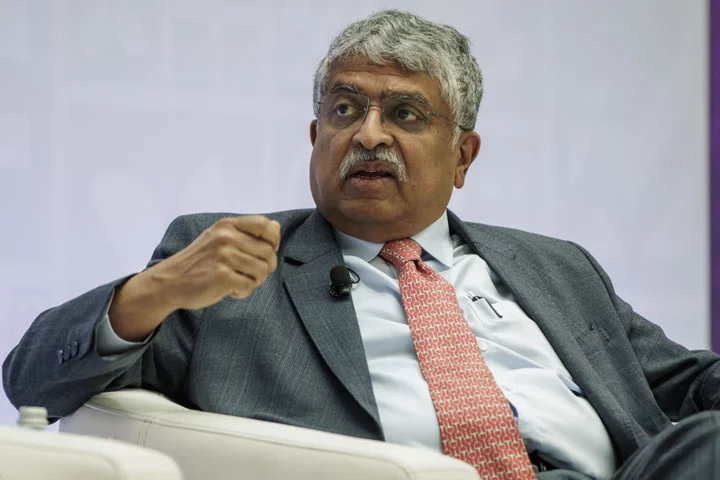
Billionaire Infosys Chair Gives Alma Mater $38.5 Million for AI
Billionaire Infosys Ltd. co-founder Nandan Nilekani will donate $38.5 million to his alma mater Indian Institute of Technology
2023-06-20 14:16
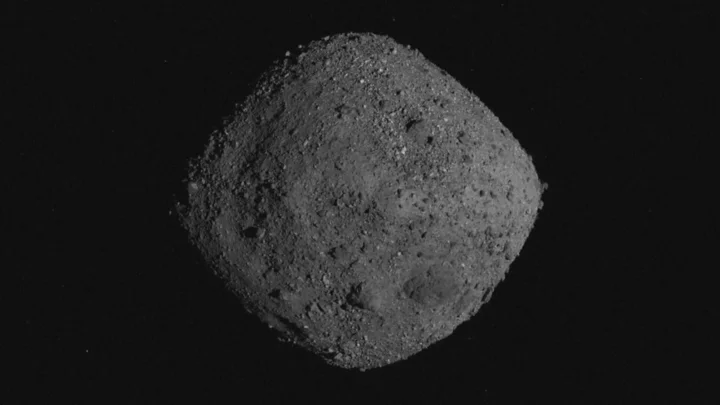
Scientists weren't expecting what they found when they opened up the Bennu asteroid capsule
In late September, scientists at NASA and around the world eagerly awaited the arrival of the OSIRIS-REx capsule containing a sample of the asteroid Bennu. The capsule safely landed on Earth on Sunday 24 September in a Utah desert containing a sample of the asteroid Bennu – categorised as one of the two “most hazardous known asteroids”. When the capsule was first opened, it sparked audible gasps from scientists. Since its arrival, NASA has kept its cards fairly close to its chest but a new blog post from the space agency suggests that progress is going slowly for the “best reason” as there is more sample material than they had anticipated. They explained: “The abundance of material found when the science canister lid was removed earlier this week has meant that the process of disassembling the TAGSAM (Touch-and-Go Sample Acquisition Mechanism) head – which holds the bulk of material from the asteroid – is off to a methodical start.” The OSIRIS-REx’s mission took 7 years to complete, with the sample currently being analysed by NASA taken three years ago before making its way down to Earth. Imagery from the moment the sample was taken confirmed to scientists that there would be asteroid material where they found it, but the quantity of dark particles were far more than they had anticipated. “The very best ‘problem’ to have is that there is so much material, it’s taking longer than we expected to collect it,” said deputy OSIRIS-REx curation lead Christopher Snead of NASA’s Johnson Space Center. “There’s a lot of abundant material outside the TAGSAM head that’s interesting in its own right. It’s really spectacular to have all that material there.” In the coming weeks, experts will continue to work through the particles and begin the complex process of carefully disassembling the TAGSAM to reach the bulk of the Bennu sample inside. Sign up to our free Indy100 weekly newsletter Have your say in our news democracy. Click the upvote icon at the top of the page to help raise this article through the indy100 rankings.
2023-10-05 22:48
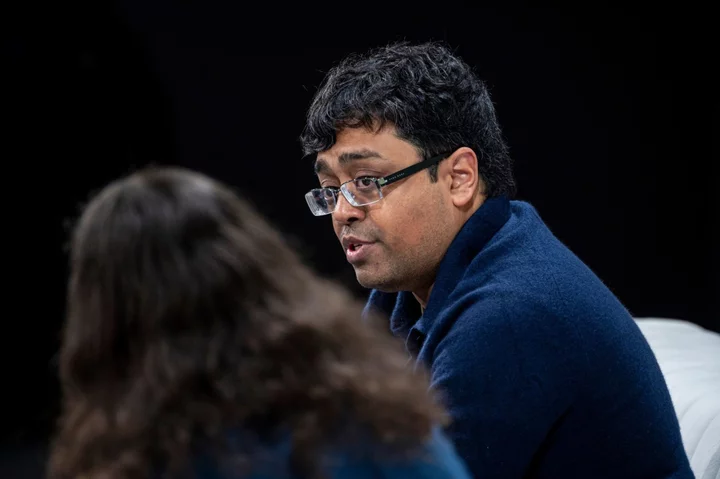
Stability AI Head of Research Resigns From Startup
Stability AI, the closely watched artificial intelligence startup, has lost at least two top executives in recent weeks,
2023-06-27 06:58
Grok vs ChatGPT: How Elon Musk’s ‘spicy’ AI compares to ‘woke’ alternatives
Less than eight months after discouraging companies from developing advanced artificial intelligence, Elon Musk has unveiled his answer to “woke” AI chatbots like ChatGPT. The tech billionaire claims his new Grok AI is both smarter and funnier than its rivals, offering paid users of X (formerly Twitter) the chance to ask it “spicy questions that are rejected by most other AI systems”. The X boss offered an example of how it will answer “almost anything”, sharing a screenshot of a user asking it how to make cocaine. “Grok is designed to answer questions with a bit of wit and has a rebellious streak,” a blog post announcing its launch noted. “Please don’t use it if you hate humour!” What differentiates it from OpenAI’s ChatGPT and Google’s Bard is that it has access to real-time data from X, which Mr Musk took over almost exactly a year ago. Before the takeover, AI firms were using Twitter as a data set to train its models, however the tech billionaire shut this down following the release of ChatGPT last November. Initially labelled “TruthGPT”, Grok takes its name from Robert A. Heinlein’s novel Stranger in a Strange Land, meaning understanding something thoroughly and intuitively, while the tone of its responses are modelled on the same writing style as Douglas Adams’s Hitchhiker’s Guide to the Galaxy. But with X as its training set, Grok risks mimicking the same misinformation and toxic discourse that has plagued the platform since before Musk’s takeover. Not only does it adopt a more informal tone to its rivals, Grok also appears to have less safety filters preventing it from answering questions about sensitive topics. Despite claiming that Grok outperforms ChatGPT, which is freely available, xAI did acknowledge that it does not yet match the capabilities of OpenAI’s more powerful GPT-4 model – which carries a similar monthly fee to Grok. In its own in-house tests, xAI graded Grok against GPT-4 on the 2023 Hungarian national high school finals in mathematics. Grok passed the exam with a mark of 59 per cent, while GPT-4 scored 68 per cent. In March this year, Mr Musk was among hundreds of leading tech figures to add their name to an open letter calling on all AI labs to pause the training of AI systems. The letter warned that artificial intelligence with “human-competitive intelligence” could pose “profound risks to society and humanity”, potentially leading to the loss of control of human civilisation and even its extinction. This letter of discouragement looks increasingly like a plea to allow his own companies – which include the newly formed xAI – to catch up. Just weeks before signing it, Mr Musk was approaching AI researchers to form xAI, with the explicit intention of taking on ChatGPT. The world’s richest person had been instrumental in the formation of OpenAI in 2015 but cut ties after it became a for-profit endeavour. His team included researchers from OpenAI and Google’s DeepMind, who had experience in developing large language models (LLMs) that power AI chatbots. The reason he cited for creating his own chatbot was due to apparent fears that these tech companies were creating “woke” AI systems. “The danger of training AI to be woke – in other words, lie – is deadly,” he tweeted last December in reply to a post by OpenAI chief executive Sam Altman. The new chatbot fits in with Musk’s broader goals that he is hoping to achieve with his other companies, including SpaceX’s mission to transform humanity into a multi-planetary species “Unless the woke mind virus, which is fundamentally anti-science, anti-merit, and anti-human in general, is stopped, civilisation will never become multiplanetary,” Mr Musk said. In justifying why it built Grok, xAI said its goal was to create a tool that “maximally benefits all of humanity”. The blog post explained: “We believe that it is important to design AI tools that are useful to people of all backgrounds and political views.” Read More How Elon Musk’s ‘spicy’ Grok compares to ‘woke’ ChatGPT Musk shares cocaine recipe in effort to prove Grok AI is ‘rebellious’ Elon Musk unveils new sarcasm-loving AI chatbot for premium X subscribers 10 ways AI will change the world – from curing cancer to wiping out humanity Musk shares cocaine recipe in effort to prove Grok AI is ‘rebellious’
2023-11-07 18:21

Amouranth: 5 unknown facts about Twitch's sleeping queen who launched AI chatbot for fans to date her
Amouranth became particularly well-known for her gaming content, ASMR and 'hot tub' streams
2023-06-14 14:59
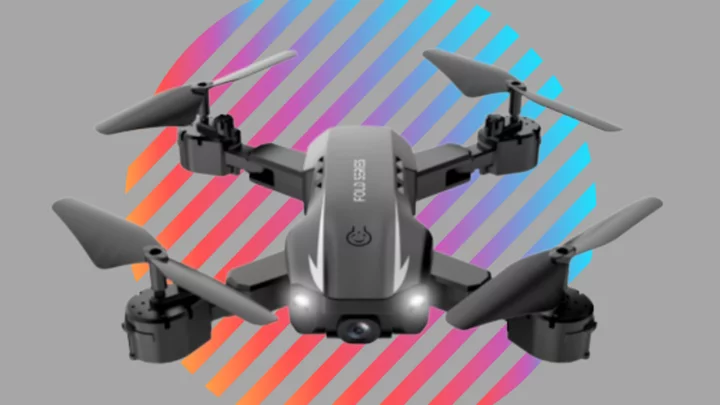
Get a whole new perspective this summer with this 4K drone, now $110 off
TL;DR: As of June 26, you can get the Ninja Dragons Blade X 4K Dual
2023-06-26 17:48
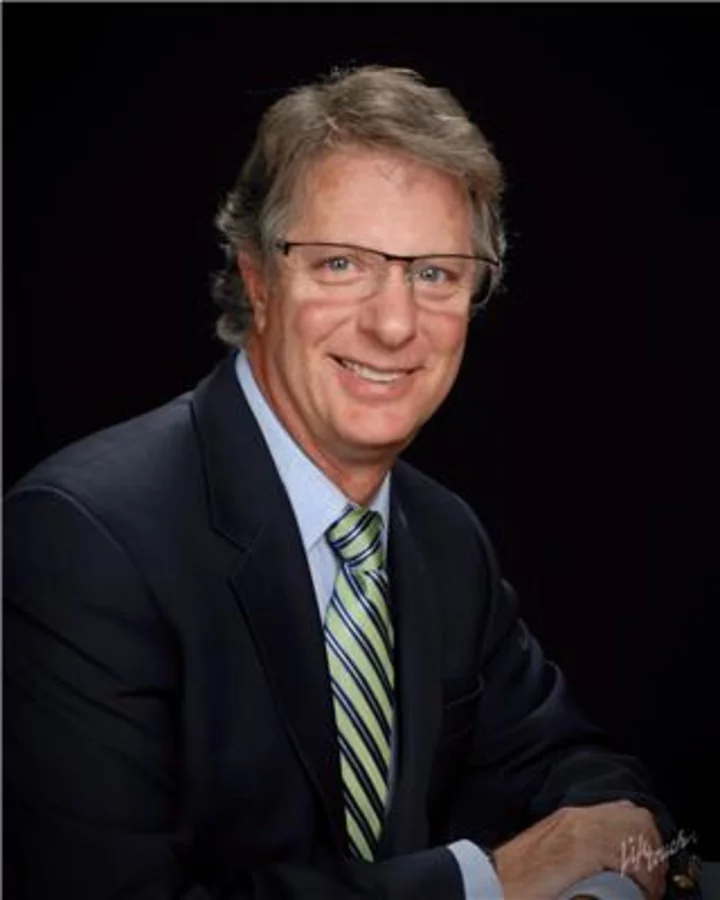
Krach Institute Appoints Edtech Veteran Lee Rubenstein as Chief Training and Education Officer to Fortify U.S. and Allied Tech Diplomacy Capabilities
WEST LAFAYETTE, Ind. & WASHINGTON--(BUSINESS WIRE)--Aug 21, 2023--
2023-08-21 20:20
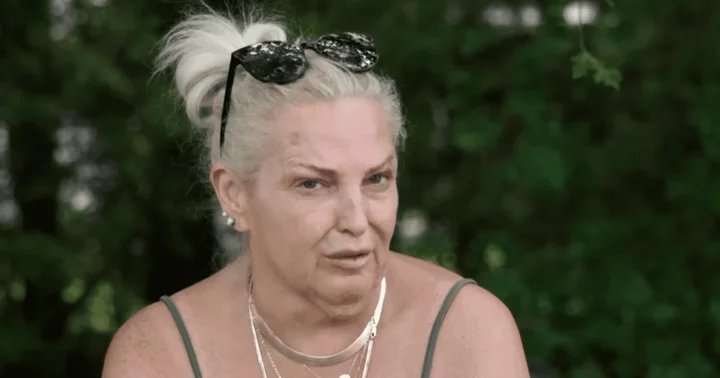
'90 Day Fiance' star Angela Deem brutally trolled over cryptic video, fans say 'nothing like a midlife crisis'
'90 Day Fiancé' star Angela Deem shares a new TikTok video
2023-06-26 11:15

The Best All-in-One Printers for 2023
Who doesn't want to reduce the number of machines around the house or the office
2023-06-19 00:55

How to get free subscription to Paige Spiranac's OnlyPaige website?
Subscribers will have access to behind-the-scene videos, exclusive content, and photos of Paige Spiranac that she does not post on social media
2023-07-03 15:47
You Might Like...
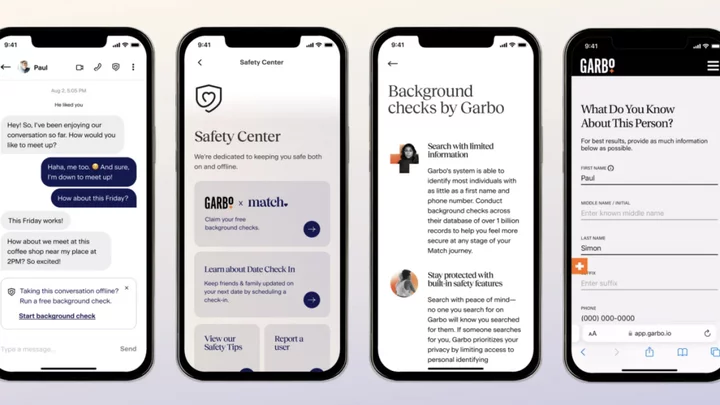
Tinder's background check partner Garbo has ended the relationship

Sean Penn, backing WGA strike, calls Producers Guild the 'Bankers Guild' at Cannes Film Festival

Beat the heat this summer with $65 off a Windmill smart home AC unit
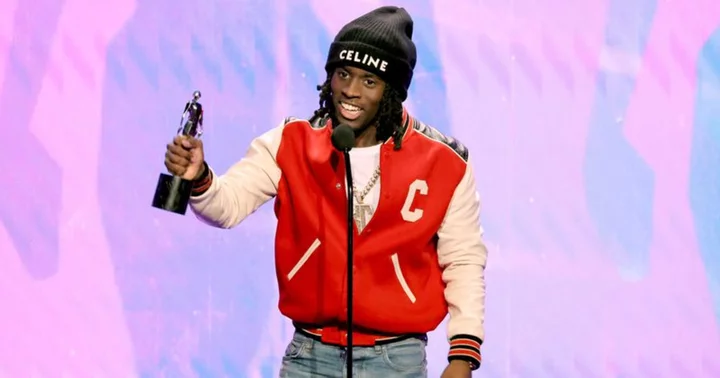
Kai Cenat: Twitch king reveals why people thought he was getting banned from purple platform 'left and right'
China's BYD beefs up autonomous driving credentials with new unit, hiring spree

Microsoft Officially Brings Bing Chat to Google Chrome on Desktop

Here's all you need to know about TikTok's AI chatbot

More about culture than competition, HBCU classics are like a family reunion in the Black community