

Bitcoin mining rate hits all-time high amid record-breaking prediction for 2024
Bitcoin is trading at its highest level in more than 18 months, with its price up more than 100 per cent since the start of 2023. The rally has pushed bitcoin’s market cap above $700 billion and the overall crypto market close to $1.5 trillion. The figure is still a long way from its all-time high of around $3 trillion, which was reached at the end of 2021, however some crypto analysts believe the recent gains are the beginning of another record-breaking run. Bitcoin’s hash rate – which denotes how much computing power is required to verify transactions and generate new units of the cryptocurrency through a process called mining – hit a record high this week, according to data from Blockchain.com. This signals a resilient network, with hopes of future price gains attracting an increasing number of miners. Recent reports have revealed significant investment in cryptocurrency mining from both state-backed and commercial ventures. Tether, the issuer of the stablecoin USDT is planning to invest $500 million in mining, while satellite imagery analysed by Forbes suggests Bhutan’s government is establishing a massive bitcoin mining operation in the foothills of the Himalayas. Separate data reveals that miners have been profiting from cheap energy sources to reduce their average BTC production cost by 35 per cent from $21,100 to $13,800. “This data underscores a considerably stronger profitability in the mining sector compared to the challenges experienced throughout 2022 and part of 2023,” said research analyst Matteo Greco from the fintech investment firm Fineqia International. In roughly six months, bitcoin will undergo an event known as a “halving”, which will see the amount of new bitcoins awarded to miners cut by half. The event was hardcoded into bitcoin’s underlying blockchain by its pseudonymous creator Satoshi Nakamoto, who introduced it as an anti-inflationary measure when the cryptocurrency first launched in 2009. Taking place approximately every four years, the build up to the halvings have traditionally been the most profitable time for crypto investors. “Buy bitcoin six months before a halving and sell 18 months after a halving has historically beaten ‘buy and hold’ trading strategy,” Dutch crypto trader PlanB wrote earlier this year. “The next halving is April 2024... Will this strategy work again?” Read More Google issues one-week deadline to Gmail account holders UK and South Korea issue warning over North Korea-linked cyber attacks Researchers warned of dangerous AI discovery just before OpenAI chaos Crypto experts predict which bitcoin rivals to look out for
2023-11-24 03:56

CardboardCowboy’s ban: Ludwig mocks Twitch for poor management
CardboardCowboy expressed his dismay at the lack of transparency, highlighting the necessity for clear communication
2023-06-11 19:21

Scientists have just discovered a sixth taste to join salty, sweet, sour, bitter and umami
We're all familiar with the different basic tastes - sweet, sour, salty, bitter, and umami - but now scientists have found a sixth one where the tongue detects ammonium chloride. Research from USC Dornsife has discovered that protein receptors on the tongue not only respond to sour taste but also to ammonium chloride as well. Scientists were very much aware that the tongue responds to ammonium chloride, but haven't been able to specify which exact protein receptors... until now. The protein OTOP1 is responsible for this which can be found in the cell membranes and forms a channel for hydrogen ions moving into the cell. Whenever we taste anything that's particularly sour such as vinegar or lemon juice, OTOP1 is able to detect the acidity found in both of those. Therefore, given that ammonium chloride similarly affects the concentration of hydrogen ions within a cell, research was carried out on whether OTOP1 protein would react to this too. After lab-grown human cells with OTOP1 protein were created and exposed to acid or to ammonium chloride, the team found that ammonium chloride was a "strong activator" of OTOP1. “We saw that ammonium chloride is a really strong activator of the OTOP1 channel. It activates as well or better than acids,” Dr Emily Liman, a professor of biological sciences at USC Dornsife and study author. Now, perhaps you're wondering what ammonium chloride tastes like, one example of where it can be found is in salt liquorice candy which is popular in Nordic countries. “If you live in a Scandinavian country, you will be familiar with and may like this taste,” Dr Liman added. Though the flavour can be of an acquired taste and one that many may not be a fan of - but there is an explanation for this. “Ammonium is found in waste products – think of fertilizer – and is somewhat toxic, so it makes sense we evolved taste mechanisms to detect it,” Dr Liman explained. Sign up to our free Indy100 weekly newsletter Have your say in our news democracy. Click the upvote icon at the top of the page to help raise this article through the indy100 rankings.
2023-10-09 22:57

Intelsat Selected by Air Canada for Expanded Fleet Connectivity
MCLEAN, Va.--(BUSINESS WIRE)--Sep 5, 2023--
2023-09-05 23:18

Deutsche Bank, Commerzbank, ING Data Breached in MOVEit Hack
Deutsche Bank AG, Commerzbank AG and ING Groep NV are among dozens of companies worldwide whose client data
2023-07-11 20:47
Letitia James and 32 other attorneys general sue Meta for ‘harming youth’
Attorneys general from 33 states, including New York AG Letitia James, have filed a lawsuit against tech giant Meta alleging it designed harmful features that contributed to the youth mental health crisis. The lawsuit, filed in the Northern District of California, alleges that Mark Zuckerberg’s company knowingly created addictive and “psychologically manipulative” features targeted at young people while falsely assuring the public it was safe to use. Some of the features, they say, include infinite scrolling, filters that change a person’s face or body, notifications that call young people back to Meta’s social media platforms like Instagram and Facebook and more. “Meta has profited from children’s pain by intentionally designing its platforms with manipulative features that make children addicted to their platforms while lowering their self-esteem,” Ms James said in a statement. “Social media companies, including Meta, have contributed to a national youth mental health crisis and they must be held accountable,” she added. Multiple studies have shown that children and teenagers’ prolonged exposure to social media can have negative impacts on their mental health due to disrupting their sleep, exposing them to bullying, rumour spreading, unrealistic views of people’s lives and more Plaintiffs in the lawsuit allege that Meta internally knew the impact of social media on young people but denied and downplayed the potential harm anyway in order to maximize profit – something a Facebook whistleblower testified to Congress about in 2021. The lawsuit seeks to force Meta to drastically change some of its design features that they allege are harmful to young people as well as impose financial penalties under each state’s specific consumer protection law. In a statement provided to The Independent, a spokesperson for Meta said, “We share the attorneys general’s commitment to providing teens with safe, positive experiences online, and have already introduced over 30 tools to support teens and their families.” Some of the “tools” Meta has implemented to help young people include age verification, preventing content that promotes harmful behaviours, giving users the option to hide “like” counts, prompting young people to take breaks or set timers and more. “We’re disappointed that instead of working productively with companies across the industry to create clear, age-appropriate standards for the many apps teens use, the attorneys general have chosen this path,” the spokesperson added. The lawsuit is the latest action taken against tech giants as concern about the impact of social media on young people grows. Read More People’s Instagram posts are showing where they are not expected Google and Meta withdraw from upcoming Web Summit Mark Zuckerberg uses Meta’s new AI Ray-Bans to braid daughter’s hair WhatsApp update will change how you log in forever Instagram Threads adds yet more features as it tries to take over from Twitter Viral WhatsApp warning of cyberattack targeting Jewish people is fake
2023-10-25 06:23

'RHONJ' star Luis Ruelas slammed as he introduces his business team: 'Made a deal with the devil'
Luis Ruelas is expanding his business empire and his recent achievement has set tongues wagging
2023-06-22 09:24
Blackstone and Permira to buy Adevinta for about $13 billion
Permira and Blackstone on Tuesday said that they willacquire eBay-backed online classifieds group Adevinta ASA for about 141
2023-11-22 00:53

How to livestream Giro d’Italia online for free
SAVE 49%: Watch Giro d’Italia livestreams from anywhere in the world with ExpressVPN. A one-year
2023-05-10 11:53

Electric Bus Maker Proterra’s Bankruptcy Reveals ‘Finite Window’ for EV Startups
Electric bus maker Proterra Inc. had support from US President Joe Biden, contracts with 135 transit agencies and
2023-08-17 10:47
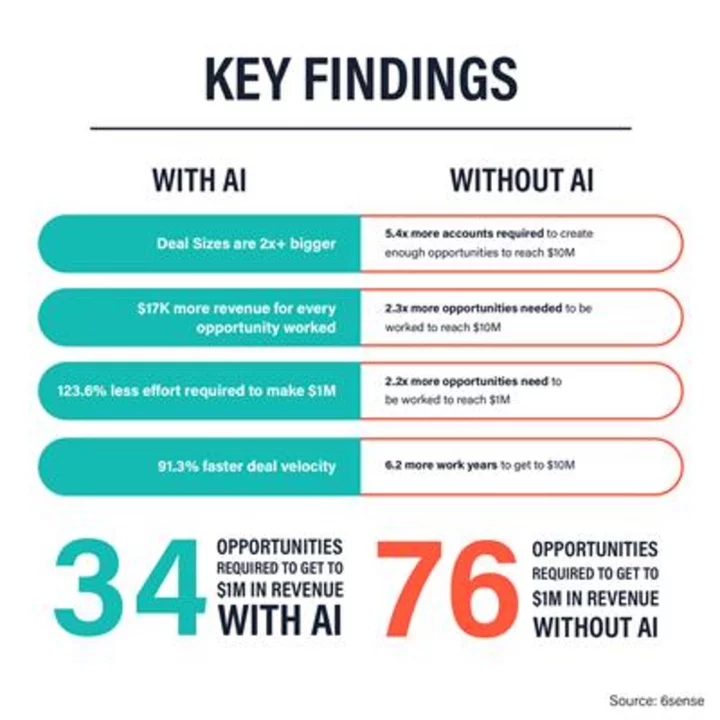
State of B2B Revenue Report: AI Shifts from Novelty to Necessity to Accelerate Revenue Growth with 123% Less Effort
SAN FRANCISCO--(BUSINESS WIRE)--Jun 20, 2023--
2023-06-20 20:54

US Must Widen China Chip Curbs in Micron Response, Lawmaker Says
A prominent US lawmaker is urging Washington to strike back against China for its decision to bar Micron
2023-05-24 09:55
You Might Like...

Amazon Echo Frames (2nd Gen) Review

Caroline Ellison faces cross-examination at Sam Bankman-Fried's trial
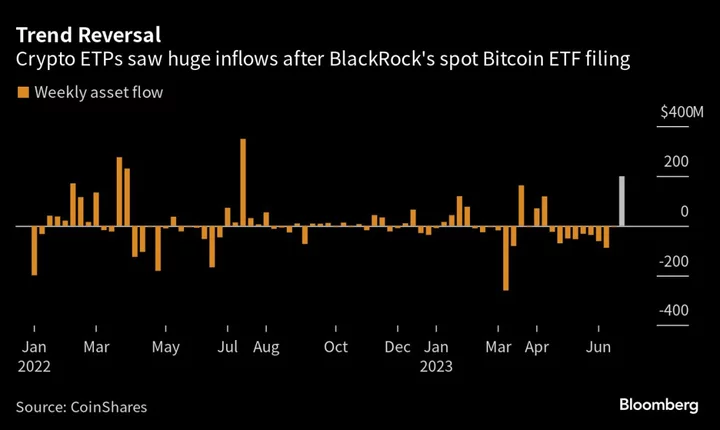
Digital Asset Inflows Highest in a Year After BlackRock’s Spot-Bitcoin ETF Filing

UK competition regulator proposes guiding principles to make AI market safe

PlugShare Achieves Milestone of More Than 6.5 Million Check-Ins as Global EV Adoption Grows

Greta Thunberg Pleads Not Guilty to London Oil Protest Offense

AVEVA Further Strengthens Executive Leadership Team with Four New Senior Roles

Amazon Workers Walk Out to Protest Climate, Office Return Policy