
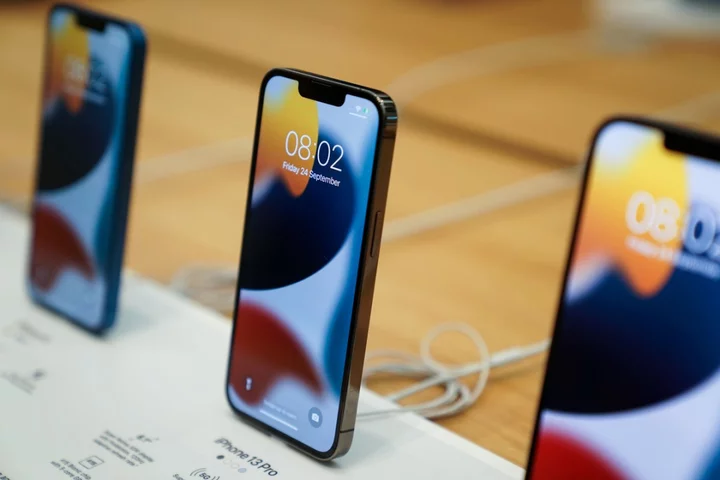
iOS 17: New iPhone update could completely change how lock screen works
The upcoming major iPhone update could change how its lock screen works, according to a new report. iOS 17, which will be revealed during Apple’s Worldwide Developer Conference (WWDC) in early June, is rumoured to bring a whole host of changes to the iPhone, including journaling apps and additions for the Health. While that WWDC event is likely to focus on Apple’s rumoured new headset, there is expected to be plenty of upgrades for other platforms too. One of those upgrades is the new feature that will change the iPhone’s lock screen so that it works more like an “ambient” display, according to a new report. That would mean that it would provide extra information – such as weather reports, calendar updates and more – when it was left on. As such, it could take on the job of an alarm clock or kitchen display, and then move back into being an iPhone or iPad when it was taken on the move. The mode will switch on when the phone or tablet is placed down in landscape mode, according to a new report from Bloomberg. It would allow the devices to compete with other smart displays from Amazon and Google, which both offer screens that are intended to be used in the kitchen or bedroom and are operated through their virtual assistants. Apple has not made one of those screens, though it has often been rumoured to be working on. Its only smart home equipment has focused on audio, in the form of the HomePod and HomePod Mini. Now Apple could replicate the functionality without requiring people to buy a whole new display. Apple already offers something similar in its watches, which have a devoted “nightstand mode” when they placed on their side for charging. When that happens, they show a more ambient time that allows them to be used as an alarm clock by the bed, for instance. And Apple has recently made a number of changes to the home and lock screens with a view to making them more actively useful. Last year, with iOS 16, it added widgets to that lock screen, for instance. The iPhone 14 Pro, released last year, also includes an always-on display that would presumably mean they could show that ambient mode without too much battery drain. Read More Apple lays bare danger of losing your health data Apple is making a ‘mixed reality’ headset. Here’s what that future might look like Montana TikTok ban ‘unconstitutional’ and ‘impossible to enforce’ Apple and Samsung use AI to make phones more accessible for disabled people Apple releases its first transparent product in years New iPhone feature can recreate your voice perfectly after just 15 minutes
2023-05-26 04:55

The Israel-Hamas war reveals how social media sells you the illusion of reality
As the Israel-Hamas war reaches the end of its first week, millions have turned to platforms including TikTok and Instagram in hopes of comprehending the brutal conflict in real time. Trending search terms on TikTok in recent days illustrate the hunger for frontline perspectives: From "graphic Israel footage" to "live stream in Israel right now," internet users are seeking out raw, unfiltered accounts of a crisis they are desperate to understand.
2023-10-15 00:49

German automakers in 'darkest moment' speed up EV transition - Chinese executive
MUNICH German automakers under heavy pressure from Chinese competition are speeding up their transition to electric vehicles, enabling
2023-09-06 17:57

Logan Paul and KSI believe Dillon Danis has crossed all lines when it comes to their girlfriends: 'All is fair in love and war'
Logan Paul and KSI have been on the receiving end of Dillon Danis's trolling
2023-08-31 13:47

Screen sharing might be coming to WhatsApp for Android
It looks like Android phones — seemingly always a beat behind iOS in the eyes
2023-05-30 01:56

X is shutting down feature to send posts to select people after privacy concern
X is shutting down Circles months after some users flagged glitches with the privacy-focused tool that lets users send posts to a select audience. The Elon Musk-owned company that was earlier called Twitter said on Thursday that Circles will be disabled by 31 October. “After this date, you will not be able to create new posts that are limited to your Circle, nor will you be able to add people to your Circle,” X wrote in a post. “You will, however, be able to remove people from your Circle, by unfollowing them,” the company said. Once unfollowed, users previously part of one’s Circle “can no longer see your past Circle Posts,” it said. The feature – similar to Instagram’s Close Friends stories – was officially launched in August 2022 when the platform was called Twitter, and before the Tesla billionaire took over the company. “Twitter Circle is a way to send Tweets to select people, and share your thoughts with a smaller crowd,” the company had said after the feature’s launch. “You choose who’s in your Twitter Circle, and only the individuals you’ve added can reply to and interact with the Tweets you share in the circle,” it had then said. Then in April, a software glitch exposed the private posts of some users to other followers and strangers not part of their Circle, sparking widespread privacy concern. Users began noticing their private Circle posts began appearing on the algorithmically generated “For You” timeline, meaning these posts were being noticed by people outside the intended audience. In some cases, users noticed their Circle posts were even reaching people who don’t even follow them. In emails sent to affected users, X said a “security incident” was behind the public display of their Circle tweets, adding that the issue was “immediately fixed” so these posts were no longer visible outside of the user’s Circle. “We’ve conducted a thorough investigation to understand how this occurred and have addressed this issue,” the company said. “We understand the risks that an incident like this can introduce and we deeply regret this happened,” it said at the time. The software bug added to the number of issues that plagued Twitter following Mr Musk’s takeover of the company and the multibillionaire laying off nearly two-thirds of its workforce. The glitch was likely due to the platform’s recommendation algorithm likely failing to filter out Circle posts before sharing them with others on the site, former Twitter engineer Theo Browne told TechCrunch at the time. Now, in a new update, X said in a post that it is “deprecating Circles as of Oct 31st, 2023”, without delving into why the company is shutting down the feature. Read More Two dead and dozens injured after bus carrying high school band crashes on I-84 in New York Tourist calls police after being charged £500 for chilli crab in Singapore Scientists discover world’s oldest human-built structure, built by an extinct species ChatGPT can now generate images and create illustrated books Man drives off bridge ‘following Google Maps’ Solar panel breakthrough could supercharge ‘miracle material’ production
2023-09-22 12:59

The top controversial influencers to keep an eye on, as per TikTok
Here's a list of five personalities who have been termed the most polarizing influencers by TikTokers
2023-07-02 18:53

Many adults would struggle to understand video-sharing platforms’ rules – Ofcom
Many adults would struggle to understand the terms and conditions for using video-sharing apps, making them particularly unsuitable for children, Ofcom has found. The regulator calculated that the T&Cs set by six platforms – BitChute, Brand New Tube, OnlyFans, Snapchat, TikTok and Twitch – required advanced reading skills to understand, making them unsuitable for many users, including children. At nearly 16,000 words, OnlyFans had the longest terms of service, which would take its adult users more than an hour to read, the regulator said. This was followed by Twitch (27 minutes, 6,678 words), Snapchat (20 minutes, 4,903 words), TikTok (19 minutes, 4,773 words), Brand New Tube (10 minutes, 2,492 words) and BitChute (8 minutes, 2,017 words). Ofcom calculated a ‘reading ease’ score for each platform’s terms of service, finding that all but one was “difficult to read and best understood by high-school graduates”. Twitch’s terms were found to be the most difficult to read, while TikTok was the only platform with terms of service that were likely to be understood by users without a high school or university education – although the reading level required was still higher than that of the youngest users permitted on the site. Ofcom also found that Snapchat, TikTok and BitChute use “click wrap agreements”, which make acceptance of the terms of service implicit in the act of signing up. Users are not prompted or encouraged to access the terms of service and so it makes it easier to agree to them without actually opening or reading them. The regulator said its regulation of video-sharing platforms was important in informing its broader online safety regulatory approach under the Online Safety Bill, which it expected to receive royal assent later this year. Jessica Zucker, online safety policy director at Ofcom, said: “Terms and conditions are fundamental to protecting people, including children, from harm when using social video sites and apps. “That’s because the reporting of potentially harmful videos – and effective moderation of that content – can only work if there are clear and unambiguous rules underpinning the process. “Our report found that lengthy, impenetrable and, in some cases, inconsistent terms drawn up by some UK video-sharing platforms risk leaving users and moderators in the dark. “So today we’re calling on platforms to make improvements, taking account of industry good practice highlighted in our report.” A Snapchat spokeswoman said: “As Ofcom recognises, we have a number of good-practice measures in place, including using reading-ease tools to regularly review language. “We are in the process of updating our guidelines, including adding more information about moderation and what content is and isn’t allowed. We will continue to gather feedback and work with Ofcom to ensure our rules are easy to understand.” BitChute said: “BitChute welcomes users and creators aged 16 and older from all backgrounds to exercise their individual freedoms to share and consider the widest possible variety of experiences and viewpoints. Therefore, it is essential for us to provide transparency and accessibility. “We look forward to reviewing Ofcom’s report with an eye for possible improvements.” Read More Charity boss speaks out over ‘traumatic’ encounter with royal aide Ukraine war’s heaviest fight rages in east - follow live Oxford scientists find no evidence to suggest Facebook not good for wellbeing Ozzy Osbourne PlayStation tweet which failed to reveal link to Sony banned Harry and Meghan ring young online innovators after funding awards
2023-08-09 14:18

'Black guy and a girl': xQc explains why Nmplol and Malena receive hate threads on Reddit
A document revealed that Nick Polom aka Nmplol tends to receive most negative hate threads on Reddit whenever his girlfriend Malena Tudi is featured in videos
2023-06-06 16:29
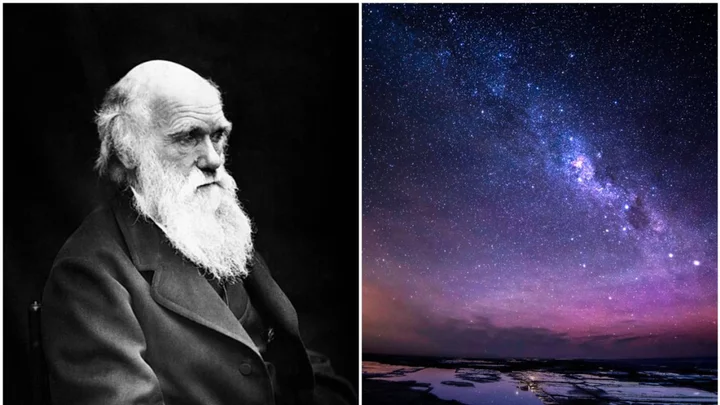
Scientists unveil 'missing' law of nature in landmark discovery
A group of scientists and philosophers claim to have identified a “missing law of nature”, in a discovery which has huge implications for our understanding of how, basically, everything works. Most of us are familiar with the names – if not the intricacies – of many of the physical laws which govern the world and beyond, such as gravity and thermodynamics. And yet, no established physical law has been able to describe the behaviours of countless complex systems that exist across the universe – until now. In a paper published in the PNAS journal on 16 October, a multidisciplinary team from some of the US’s top institutes and universities, unveiled a new law claiming to do just that. In a nutshell, their law states that evolution is not limited to life on Earth, it also occurs in other massively complex systems – from planets to atoms. This means that these systems naturally “evolve” to states of greater diversity, and complexity. In other words, the researchers found evolution to be a common feature of the natural world's complex systems which, according to the Carnegie Institution for Science, comprise the following characteristics: “They are formed from many different components, such as atoms, molecules, or cells, that can be arranged and rearranged repeatedly “Are subject to natural processes that cause countless different configurations to be formed.” Only a small fraction of these configurations survive via a process of natural selection called “selection for function”. According to the researchers, regardless of whether the system is living or nonliving, when a new configuration works and function improves, evolution occurs. The authors' new law – which they have christened "the Law of Increasing Functional Information" – states that the system will evolve "if many different configurations of the system undergo selection for one or more functions." "An important component of this proposed natural law is the idea of 'selection for function,'" the study’s lead author, astrobiologist Dr Michael L. Wong, explained. The team’s research builds on Charles Darwin’s theory of natural selection, which suggests the function exists to ensure the “survival of the fittest”. For their work, Dr Wong and his team expanded on this perspective, pointing to the existence of three types of this selection for function in nature. The first, most basic type, they claim, is stability – the stable arrangements of atoms or molecules which are selected to continue. Second, are dynamic systems which are selected for their ongoing supplies of energy. And the third, and most intriguing, function is "novelty" – the tendency of evolving systems to explore new configurations which can lead to surprising new behaviours or characteristics. Novelties are, ironically, nothing new. Indeed, life’s evolutionary history is rich with examples: photosynthesis evolved when single cells learned to harness light energy; multicellular life evolved when cells learned to cooperate; and species evolved thanks to advantageous new behaviours such as walking and thinking. The same type of evolution happens in the mineral kingdom, as the Carnegie Institution for Science notes in a release published by Phys.org. Indeed, Earth's minerals, which began with about 20 at the dawn of our solar system, now number almost 6,000 known today. This is thanks to the ever more complex physical, chemical, and biological processes which have occurred over the past 4.5 billion years. The paper also notes that just two major elements – hydrogen and helium – formed the first stars shortly after the big bang. Those earliest stars then used this hydrogen and helium to create around 20 heavier chemical elements, which was built upon by the next generation of stars. "Charles Darwin eloquently articulated the way plants and animals evolve by natural selection, with many variations and traits of individuals and many different configurations," co-author and research lead Robert M. Hazen explained. "We contend that Darwinian theory is just a very special, very important case within a far larger natural phenomenon. “The notion that selection for function drives evolution applies equally to stars, atoms, minerals, and many other conceptually equivalent situations where many configurations are subjected to selective pressure." The new law has a number of exciting implications, including a deeper understanding of how the Universe itself came to exist. It could also help explain how life differs from other complex evolving systems, and could help aid the search for life elsewhere. Furthermore, at a time when increasingly autonomous AI systems are of increasing concern, it’s very handy to have a law that characterises how both natural and symbolic systems evolve. It also offers insights into how we could artificially influence the rate of evolution of some systems which, again, could prove invaluable. The key point to remember, as Dr Wong put it, is that whilst life is the “most striking example of evolution”, it’s not the only one. Evolution, it transpires, is everywhere. Sign up for our free Indy100 weekly newsletter Have your say in our news democracy. Click the upvote icon at the top of the page to help raise this article through the indy100 rankings.
2023-10-17 19:20

DJI Osmo Action 4 Review
The DJI Osmo Action 4 ($399) makes a good argument for buying an action camera
2023-08-02 21:58

Microsoft’s Activision Deal Gets Sliver of Hope as EU Defies UK
Microsoft Corp.’s $69 billion takeover bid for games developer Activision Blizzard Inc. came back from the brink after
2023-05-16 11:25
You Might Like...

MGM Websites Remain Down After Cyberattack Hits Casinos and Hotels

Intrepid Automation Secures Series A Fundraise to Accelerate Deployment Support Initiatives

Newegg Levels Up for National Video Games Day

Kodak Wins Prestigious Licensing International Excellence Award Honoring Innovation and Creativity in Brand Licensing

Scientific test will reveal how vulnerable you are to fake news

The Best Waterproof Headphones for 2023

After secret documents leak, Pentagon plans tighter controls to protect classified information

Adin Ross asks fans if they would rather 'shoot' Pokimane or HasanAbi amid Kick vs Twitch controversy: 'What kind of drugs is he smoking?'