
Sdorn Provides Timely and Accurate Technology News, Covering APP, AI, IoT, Cybersecurity, Startup and Innovation.
⎯ 《 Sdorn • Com 》
Feeling Adventurous? The U.S. Government Is Giving Away Lighthouses
If you've always wanted to live in a lighthouse, now is your chance.
2023-05-27 05:16
Conspiracy theorists believe there is a secret planet
Conspiracy theorists think that there is a hidden planet in out Solar System that will eventually destroy humanity. That's right, conspiracy theorists believe there is a secret ninth planet that was discovered by 19th-century astronomer Percival Lowell. The planet was given the name 'Planet X', also known as Nibiru, by Lowell, who believed the inhabitants of the planet made humans who we are today. Despite Lowell never actually seeing the mystery planet, he was convinced of its existence and left $1 million to fund research about the planet after he passed away in 1916. A hundred years later and all the money spent, it was concluded that the planet never existed. But this hasn't stopped conspiracy theorists from vowing to continue the search. With Caltech professors Mike Brown and Konstantin Batygin even going as far as to co-author a paper suggesting the planet exists "I didn't have a particularly strong appreciation for just how difficult would be to find Planet Nine until I started looking together with Mike using telescopes," Professor Batygin told the BBC. "The reason it's such a tough search is because most astronomical surveys are not looking for a single thing." It was initially predicted that Planet X would bring about the end of the world in 2003, but it did not smash into Earth as had been suggested. In 2012 it was again predicted that the planet would collide with Earth at the end of the year, which I don't need to tell you, did not happen. Dr Scott Sheppard and Professor Chad Trujillo sought to explain a strange cluster of six small objects in the Kuiper Belt beyond Neptune back in 2014. They suggested that a large planet was lurking in the solar system, with Dr Sheppard saying: "These distant objects are like breadcrumbs leading us to Planet X. 'The more of them we can find, the better we can understand the outer Solar System and the possible plant that we think is shaping their orbits - a discovery that would redefine our knowledge of the Solar System's evolution." Sign up to our free Indy100 weekly newsletter Have your say in our news democracy. Click the upvote icon at the top of the page to help raise this article through the indy100 rankings.
2023-10-16 18:19
‘Game-changing’ facial recognition technology catches prolific shoplifters
Britain’s biggest police force is using “game-changing” facial recognition technology to catch prolific shoplifters. The Metropolitan Police asked 12 retailers to provide images of 30 of the worst offenders who steal from their shops in a pilot of the new software. They were compared against the force’s custody shots, and of 302 images submitted, 149 came up as positive matches. Those matches are now being investigated further with a view to building criminal cases. The software uses biometric measures of a person’s face and works even if part of their face is covered. It takes around 60 seconds to find a match. Commissioner Sir Mark Rowley said: “We’re working with shops across the capital to target and track down criminals in a way we never have before. “We’re pushing the boundaries and using innovation and technology to rapidly identify criminals. “The results we’ve seen so far are game-changing. The use of facial recognition in this way could revolutionise how we investigate and solve crime.” He claimed that most of the prolific offenders were involved in other, more serious criminal activity. “What’s most powerful is what we’ve learned about those involved in this offending so far. It’s clear the majority are career criminals involved in serious crime,” Sir Mark said. “This data and information helps us focus our efforts in an even more precise way than we originally anticipated. “Through this tactic we’re not only improving how we protect shops and support the business community, we’re stepping further forward in identifying and tracking down serious criminals and protecting all of London’s communities. “The scale of business crime in London is huge. To be successful we have to be precise in our approach and this is a really promising step forward.” Met police last year." data-source=""> Chief executive of the Association of Convenience stores James Lowman said while the technology could save police time, there is still a challenge in getting offenders off the street. He said: “Using artificial intelligence to identify prolific offenders can be an effective way of drastically reducing the amount of police time it takes to make links between crimes committed against different businesses locally. “Whether its artificial intelligence or local intelligence that leads to criminals being identified, the real challenge remains apprehending these offenders and getting them off the streets.” The Met started using the software in August and began the retail pilot in late September. The new system can use images from CCTV, dashcams, doorbell cameras or phones. It uses the same algorithm as the Met’s live facial recognition technology, about which there have been well-publicised concerns over potential bias. Lindsey Chiswick, director of intelligence for the Met and national policing lead on facial recognition, said the algorithm has been independently tested by the National Physical Laboratory. She said: “Facial recognition technology, which is able to match faces after the event, has actually been around for quite a few years. “What’s changed and what is improving all the time, and in the last few years with real speed, is the accuracy of the algorithm. And that’s the real game changer here. “With this technology, it’s an algorithm that we’ve independently tested through the National Physical Laboratory so we have assurance it’s 100% accurate when it comes to retrospective usage, and we understand how it works.” Around 50,000 shoplifting incidents were reported to the Met last year, estimated to be between 5% and 10% of the offences that are actually committed. Emmanuelle Andrews, from human rights charity Liberty that has campaigned against the use of facial recognition, said: “Facial recognition has no place on our streets, in our shops – or in any other areas of our lives. “This technology threatens our privacy and stifles free speech – and we should all be worried about moves to expand its reach. “We’re also concerned about the creep of facial recognition technology into other areas of policing. “Let’s be clear: we cannot rely on tech to solve deep societal problems, this is an unjustified expansion of state surveillance and there are numerous alternatives.” Read More Facial recognition firm Clearview AI overturns UK data privacy fine Sadiq Khan, Met Commissioner to ask phone companies to ‘design out’ theft Microsoft gets go-ahead to buy Call of Duty maker Activision Incels using TikTok to spread ‘hateful beliefs’, research suggests Duke and Duchess of Sussex call for overhaul of social media Google to trial AI in UK traffic light systems to reduce stop-and-go emissions
2023-10-19 17:50
MacBook Air 15-inch: Apple reveals big version of its smallest laptop
Apple has revealed a 15-inch version of the MacBook Air, a big version of its smallest laptop. The new MacBook Air is the smallest 15-inch laptop ever, at just over 11mm, Apple said. It is the first time Apple has made a version of its most powerful computer at such a size. Recently, Apple has only sold it in 13-inches, requiring users to pay up for a much more expensive MacBook Pro for a larger display – though it once offered the MacBook Air at 11-inches, too. Follow The Independent’s live coverage for all the latest updates Read More Apple is about to update all its products – and release a very big new one Apple is about to launch its biggest product in years. Here’s what you need to know Apple is about to hold one of its biggest ever launches. Follow everything live here
2023-06-06 01:53
Students: Slide into Summer Break Without Risking the Summer Slide
LOS ANGELES--(BUSINESS WIRE)--Jun 22, 2023--
2023-06-22 22:53
FTC is investigating ChatGPT-maker OpenAI
The Federal Trade Commission is investigating OpenAI for possible violations of consumer protection law, seeking extensive records from the maker of ChatGPT about its handling of personal data, its potential to give users inaccurate information and its "risks of harm to consumers, including reputational harm."
2023-07-13 22:20
Scientists are cutting open parasitic eggs from 200 million years ago
A 200 million-year-old parasite has been discovered in fossilised poo, in the latest not-at-all-scary instance of scientists unearthing a species which blighted the Earth in ancient times. Researchers found that the earliest predators on the planet were infested with roundworm, also known as nematodes, among multiple other parasites. The fossilised poo, which is known to palaeontologists as coprolite, is thought to belong to a type of semi-aquatic phytosaur, which was a crocodile-like predator. Sign up to our free Indy100 weekly newsletter It comes weeks after another team revived a prehistoric worm – the catchily named Panagrolaimus kolymaensis – which was found dormant in the Siberian permafrost in a state of “cryptobiosis”. The latest study saw researchers from Mahasarakham University, Thailand, analyse a three-inch-long portion of ancient poo and discover five types of parasitic remnants. The group sliced open the parasitic egg fossils with a diamond saw using a “standard thin section method,” their report said. The ultra-thin slices allowed the palaeontologists to look at cross-sections of the ancient infectious microbes under a microscope. One was identified as a nematode worm egg, while the others are thought to be either more eggs, protozoan cysts or spores from moss and ferns. While modern parasites are often an important part of ecosystems, it is usually more difficult to work out what their ancient equivalents did, because there are so few examples in the fossil record. The creatures often inhabited the soft tissues of their hosts, but are rarely preserved as fossils, making the latest discovery all-the-more significant. This fossilised late Triassic-era coprolite (the poo), was shielded from the elements in the Huai Hin Lat geological formation in Thailand, which is over 200 million years old. It was found by local villagers, according to the study's lead author, paleontologist Thanit Nonsrirach. “The peculiar appearance of these findings intrigued the villagers, who considered them potentially auspicious and capable of bestowing good luck if repurposed as talismans,” Nonsrirach told news outlet Inverse. “In 2010, our team received word of this discovery and embarked on a field expedition, guiding the villagers to the actual fossil site.” The discovery is the first record of parasites in a terrestrial vertebrate host from the late Triassic period in Asia, and provides a rare look at the life of an ancient creature that was infected by multiple species. This discovery also adds to the few known examples of nematode eggs preserved within the coprolites of Mesozoic animals. “Parasites of several species, including Ascaridida (roundworm) eggs were found in a coprolite, probably produced by a crocodile-like reptile and possibly a phytosaur,” said Nonsrirach, who works at Mahasarakham University's Palaeontological Research and Education Center. “This is therefore the first discovery of Ascaridida eggs and evidence of multi-infection in a host assignable to the Crurotarsi from the Late Triassic of Asia. “Coprolite is a significant palaeontological treasure trove, containing several undiscovered fossils and expanding our understanding of ancient ecosystems and food chains. “These findings are therefore a significant contribution to scientific understanding of the distribution and ecology of parasites of the distant past.” Have your say in our news democracy. Click the upvote icon at the top of the page to help raise this article through the indy100 rankings.
2023-08-11 18:21
First carbon capture plant opens in the US to help avoid climate catastrophe
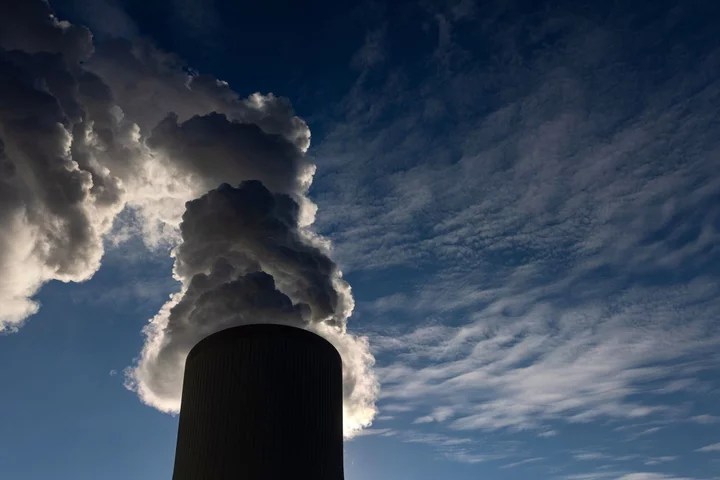
The first ever commercial-scale carbon capture facility has begun operations in the US, marking a significant milestone towards meeting cleaner climate targets. San Francisco-based startup Heirloom Carbon Technologies opened the carbon removal plant in Tracy, California, on Thursday, claiming it will be able to capture 1,000 metric tons per year of CO2. The renewable energy-powered plant leverages the natural power of limestone to remove CO2 from the atmosphere. “Rocks are some of the planet’s most vital carbon sinks. Over geological timescales, CO2 from the atmosphere binds to minerals and permanently turns to rock - a process known as carbon mineralisation,” Heirloom notes on its website. “Limestone is one of the most abundant rocks on the planet, capturing massive amounts of CO2 from the air over years, Heirloom’s technology accelerates this natural process to just days.” The process works by placing hundreds of trays of calcium oxide powder onto 12-metre-tall racks, which turns into limestone as it comes into contact with CO2 from the atmosphere. Workers then heat up the limestone, which releases the carbon dioxide and turns it back into calcium oxide that can be reused to capture more CO2. The atmospheric CO2 that is captured through the facility is permanently sequestered in concrete through a partnership between Heirloom and CarbonCure Technologies. Heirloom aims to remove 1 billion tons of CO2 from the atmosphere by 2035 using its Direct Air Capture technology, with funding coming from companies buying carbon removal credits in order to offset their own emissions. It is not the first company to achieve direct carbon capture from the atmosphere, but Heirloom claims to be the first in the US. Switzerland-based startup Climeworks AG has commercial facilities in Switzerland and Iceland, which are capable of removing 4,000 metric tons of CO2 each year. Carbon capture technologies have faced criticism for the large amounts of energy and resources they require to operate, though some scientists claim they will be a vital part of keeping global net emissions below zero by 2050. In response to criticism from green groups in 2021 claiming that such projects are a costly distraction, Professor Stuart Haszeldine from Edinburgh University said: “Carbon capture and storage is going to be the only effective way we have in the short term to prevent our steel industry, cement manufacture and many other processes from continuing to pour emissions into the atmosphere. “If we are to have any hope of keeping global temperature [increases] down below 2C then we desperately need to develop ways to capture and store carbon dioxide.” The US government announced in August that it would fund a $1.2 billion effort to develop and deploy carbon capture technologies, with Heirloom among the recipients. Major companies, including Microsoft, have already signed deals to purchase carbon removal credits from Heirloom. Read More Breakthrough solar system outperforms military-grade diesel generator Breakthrough solar system outperforms military-grade diesel generator Solar panel world record smashed with ‘miracle material’ Google issues three-week warning to Gmail account holders
2023-11-13 22:46
JPMorgan Pledges $200 Million to Suck Carbon From the Sky
JPMorgan Chase & Co. has made a $200 million commitment to pull carbon from the air. That includes
2023-05-24 01:54
Fortescue Hit by Cyber Attack That Saw Network Data Disclosed
Fortescue Metals Group Ltd. said it had been subject to a cyber attack that resulted in “the disclosure
2023-07-18 14:21
Get a refurbished iPad mini 2 for $157
TL;DR: As of August 30, you can get a refurbished iPad mini 2 for only
2023-08-30 17:22
Adtran expands Mosaic One subscriber solutions with Intellifi® for next-generation in-home Wi-Fi
HUNTSVILLE, Ala.--(BUSINESS WIRE)--Aug 21, 2023--
2023-08-21 20:21