
10 of the best online ethical hacking courses you can take for free this week
TL;DR: A wide range of ethical hacking courses are available for free on Udemy. Hacking
2023-05-19 12:28
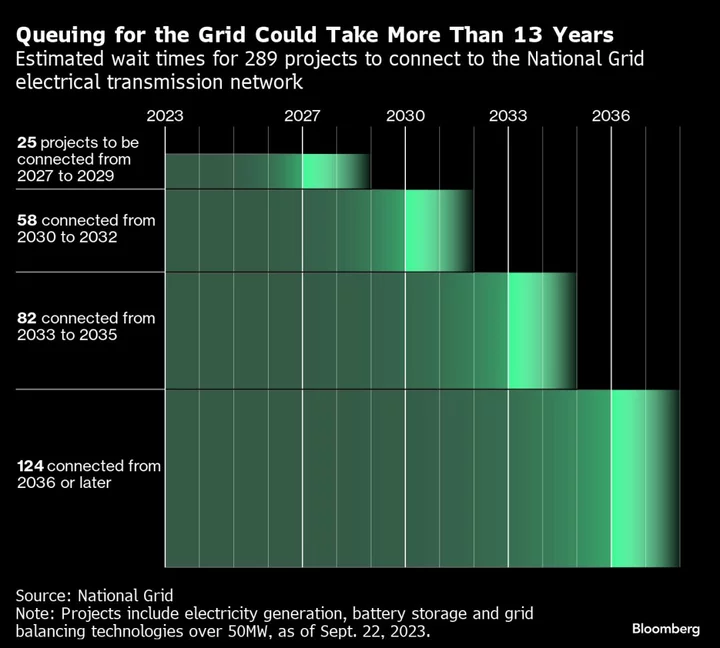
The Banker Trying to Fix the UK’s Electricity Grid
During his three decades at investment bank Morgan Stanley, Franck Petitgas developed a reputation for solving problems that
2023-09-26 12:47

Google's AI search hands-on: It's still not clear why this exists
Google's Search Generative Experience (SGE), is still a Google Labs feature, meaning parent company Alphabet,
2023-06-16 17:56
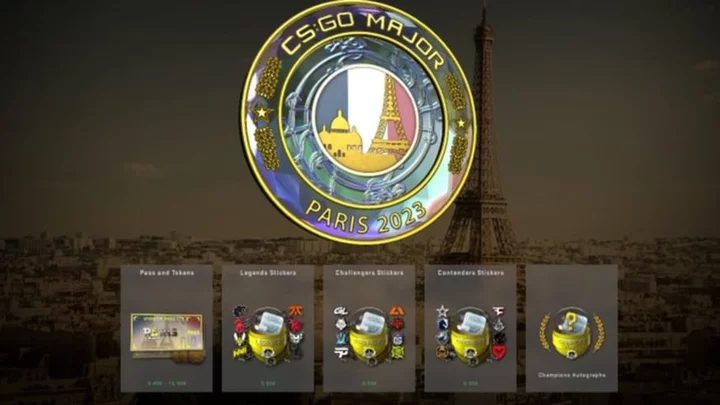
How to Redeem BLAST.tv Paris Major 2023 Souvenir Tokens
How to redeem your BLAST.tv Paris Major 2023 Souvenir Tokens during the CS:GO tournament and when they expire.
2023-05-09 02:51

Amazon Echo Show 5 vs. Echo Show 8 (2nd gen): Which is right for you?
It can be exciting when a brand like Amazon drops new versions of its devices,
2023-07-12 23:47

Occidental buys carbon air capture tech firm for $1.1 billion
By Sabrina Valle and Sourasis Bose (Reuters) -U.S. oil and gas producer Occidental Petroleum on Tuesday agreed to pay $1.1
2023-08-16 06:46

Activision HAS NOT lost Transformers games as Hasbro apologises for 'error'
Hasbro has apologised to Activision for wrongly claiming the games were lost of hard drives at its offices.
2023-08-03 20:27

Paige Spiranac sets Internet on fire with sensational golf attire, fans call her 'phenomenal'
Spiranac has mastered the art of being an influencer, captivating her audience with her engaging content
2023-07-12 22:26
Facebook owner Meta asks Norway court to halt privacy fine
By Gwladys Fouche OSLO (Reuters) -Meta Platforms on Tuesday asked a court in Norway to stop a fine that the
2023-08-22 16:51

Billie Eilish’s solar-powered Lollapalooza set
Billie Eilish’s upcoming headlining set at Lollapalooza in Chicago will be partially solar-powered, thanks to her partnership with environmental non-profit Reverb.
2023-08-01 15:25

Experts unravel mystery of the Pokémon episode that hospitalised hundreds of kids
Pokémon’s TV series has been delighting animé lovers for more than 26 years, and yet, there’s one episode that even the most diehard of fans may well have missed. The installment, titled Dennō Senshi Porygon (which roughly translates as "Computer Warrior Porygon”) aired in Japan on December 16, 1997. And, after that single, fateful outing, it was never to grace television screens again. The reason for the ban? Reports of a strange health outbreak among children which was linked to a specific scene. The episode follows Ash Ketchum, Pikachu and their pals as they investigate a faulty Poké Ball transfer machine by getting inside it. Once there, the team come under attack, but are saved when Pikachu unleashes one of his high-octane electric outbursts – represented by a barrage of red and blue strobe lights. And that’s where the trouble began. According to scientific paranormal investigator Benjamin Radford and sociologist Robert Bartholomew, who dedicated a study to the event: "At 6:51 PM, the flashing lights of Pikachu's 'attack' appeared on television screens. “By 7:30 PM, according to Japan's Fire-Defense Agency, 618 children had been taken to hospitals complaining of various symptoms." These symptoms included convulsions, nausea and vomiting, with news of the “illness” spreading rapidly throughout the country. Inevitably, it made headlines, with several news broadcasters replaying the offending clip, “whereupon even more children fell ill and sought medical attention,” Radford and Bartholomew wrote. The following day, TV Tokyo issued an apology, suspended the show, and announced an investigation into the cause of the seizures. Meanwhile, video retailers pulled the series from their shelves, and even the then-prime minister Ryuaro Hashimoto expressed concern at the use of rays and lasers in the popular cartoon. Within two days, the number of children reported to have been affected by the flashing sequence increased to around 12,700. And yet, after four months of investigation – with input from health experts and Japanese government officials – no obvious cause could be found for the outbreak and Pokémon returned to the airwaves. Because, although the bright flashes were assumed to be the cause of the health panic, such visual techniques had been used in numerous other animé episodes before, with no reports of any problems. So what was going on here? Well, a tiny fraction of the children who reported being affected were diagnosed with photosensitive epilepsy, with experts concluding that the rapid colour changes during the scene caused them to suffer seizures. However, the bulk of “patients” reported symptoms that had no identifiable “organic” cause and were, instead, consistent with a very different type of condition… Mass hysteria. Radford and Bartholomew attribute this “epidemic hysteria”, in large part, to the mass media, which they say fuelled panic and misinformation. "Many of the children's symptoms had no identifiable organic basis; other than the verified cases of seizures, the symptoms reported were minor and short-lived; the victims were nearly exclusively school children in early adolescence; and anxiety from dramatic media reports of the first wave of illness reports was evident,” they wrote. “Media reports and publicity fuel the hysteria as news of the affliction spreads, planting the idea or concern in the community while reinforcing and validating the veracity of the illness for the initial victims,” they continued. “According to news accounts of the time, the number of children said to be affected remained around 700 the evening of the Pokémon episode and the next day. “The next morning, the episode dominated the Japanese news. Japanese children who had not heard about their peers from the news or from their parents learned of it that morning when the seizures ‘were the talk of the schoolyards’,” they continued. “Once the children had a chance to hear panicky accounts of what had happened through the mass media, their friends and their schools, the number of children reported the next day to have been initially affected – 2 days earlier – increased by 12,000.” Radford and Bartholomew ended their paper by noting that this Pokémon drama offers a warning to us all. They pointed out that our continuing reliance on mass communications, especially TV and the internet, places us at risk of more and more hysteria outbreaks. “Technological innovations are occurring at unprecedented rates and have the potential to influence significant numbers of people beyond the typical number in traditional mass hysteria episodes,” they stressed. “Epidemic hysterias that in earlier periods were self-limited by geography now have free and wide access to the globe in seconds.” Concluding on an ominous note, they added: “The Pokémon illness symptoms are without precedence, given the large numbers affected, and may be a harbinger of future technological hysterias that have the capacity to affect unprecedented numbers of people at a phenomenal speed.” Sign up for our free Indy100 weekly newsletter Have your say in our news democracy. Click the upvote icon at the top of the page to help raise this article through the indy100 rankings.
2023-10-18 17:18

Japan’s Green Switch Falls Short of Global Goals, Climate Researchers Say
Japan’s planned transition toward cleaner energy contradicts pathways recommended by a United Nations body to help keep global
2023-11-14 09:22
You Might Like...

Never before seen ecosystem discovered thriving beneath ocean floor

Hosts China win Asian Games' first-ever eSports gold

Advanced Energy Launches Transformational Plasma Power Control Technology for the Angstrom Era

Eagle Eye Networks and Brivo Announce $192M Investment – One of the Largest Ever in Cloud Physical Security

This viral AI image of an 'explosion' near the Pentagon never happened

Activision bid receives UK regulatory approval
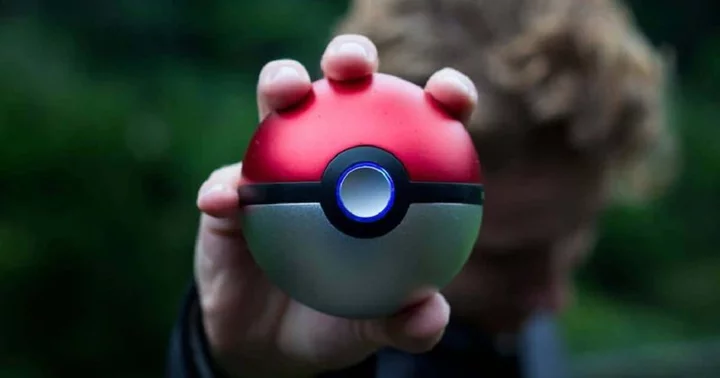
Find out if players boycotting Pokemon Go Remote Raid really works

New SpaceX flight just made history thanks to its passengers