

‘We are broken’: Armenia looks to technology to rebuild
Just two weeks after fleeing his home with barely more than the clothes on his back and the phone in his pocket, 23-year-old Ashot Gabriel is at a tech conference promoting one of the last things he has left: his startup. He is one of more than 100,000 ethnic Armenian refugees who were forced out of Nagorno-Karabakh in late September when Azerbaijani forces retook control of the breakaway enclave. Alongside his two brothers – who evacuated in a single car with their parents and a grandparent on 28 September – Gabriel is now attempting to start a new life from temporary accommodation in Armenia’s capital of Yerevan. “We lost our property, but we also lost ourselves,” he says. “We have lost our previous lives. We are starting everything from scratch.” His online marketing startup, Brothers in Business (BIB), was offered a last-minute stand at the DigiTech Expo, with organisers hoping that technology will help offer a solution for the country. As a landlocked nation lacking the natural resources of its historically hostile neighbours, Armenia’s nascent tech industry is seen as a way to achieve sovereignty and future stability in the long term, while also assisting with the humanitarian crisis in the short term. The country was once a tech hub in the region – one of the world’s first computers was built in Armenia – but much of Armenia’s talent left following the collapse of the Soviet Union in the early 1990s. A new scene emerged when émigrés returned to the country after finding success in Silicon Valley, establishing the country’s internet network and providing a foundation for startups to emerge. There are now an estimated 300 pre-seed-stage startups in Armenia, and around 100 seed-stage startups, in fields ranging from quantum computing to electric bikes. “We have this vision: Tech is the ultimate direction that will help Armenia to succeed,” says Narek Vardanyan, CEO of Prelaunch.com, whose company acts as a platform to help local startups establish themselves on the market. “We are landlocked, we have no natural resources. All we have is talent. And our only way we can develop is technology,” he says. “We don’t have a backup plan. There is no Plan B. We are betting everything on technology.” Armenia’s most successful startup so far is Picsart, an online photo editor that has grown to become the country’s only unicorn – a company with a valuation north of $1 billion. Picsart is among those offering their resources to help refugees, fast-tracking the launch of an educational program that will be offered for free to refugees and war veterans, training and reskilling them in everything from machine learning to graphic design. Hayk Sahakyan, a creative director at Picsart, says there has been a “huge number” of people interested so far, including children. This idea of building up Armenia’s tech industry through education can be found through two privately funded initiatives that are providing free courses in STEM subjects to tens of thousands of young people throughout the country. The first is TUMO, which provides free supplemental education to 12-18 year olds in creative technologies, ranging from game development to music. Since the first TUMO centre opened in Yerevan in 2011, dozens of centres have sprung up throughout Armenia and the rest of the world, including hubs in Berlin, Paris and Los Angeles. One of its six core centres and three smaller “Box” centres had to be abandoned during the Azerbaijani offensive in Nagorno-Karabakh last month. “External circumstances can literally kill us. But whenever anyone asks me whether Armenia has a future, it’s here,” says Zara Budaghyan, head of communications at TUMO. “Technology has the potential to provide a more stable economy, but also better lives. International support has been lacking. We need to rebuild by ourselves. We are broken. But this gives us something to believe in.” The second educational initiative is a network of technology, science and engineering laboratories set up in rural communities, offering children from 10-18 free after school classes. Established by UATE – a business association that also runs the DigiTech Expo – several of the labs in Nagorno-Karabakh also had to be shut down in September. UATE chief executive Sargis Karapetyan, who grew up in the region, says around 200 of his relatives were among the refugees. Karapetyan considered cancelling the DigiTech conference, saying there is still a deep distrust of Azerbaijan. There are fears that the annex was only part one. The next stage, which US Secretary of State Antony Blinken believes could happen “within weeks”, could be an invasion to establish a land corridor between the two parts of Azerbaijan. When asked what prompted the decision to persevere with the tech conference despite personal tragedy and the threat of further chaos, Karapetyan replies: "Technology will save the world.” Read More Scientists receive powerful ‘radio burst’ that travelled billions of years Mark Zuckerberg uses Meta’s new AI Ray-Bans to braid daughter’s hair Solar energy is set to eclipse fossil fuels as world passes ‘tipping point’ Scientists receive powerful ‘radio burst’ that travelled billions of years Mark Zuckerberg uses Meta’s new AI Ray-Bans to braid daughter’s hair Solar energy is set to eclipse fossil fuels as world passes ‘tipping point’
2023-10-21 02:52
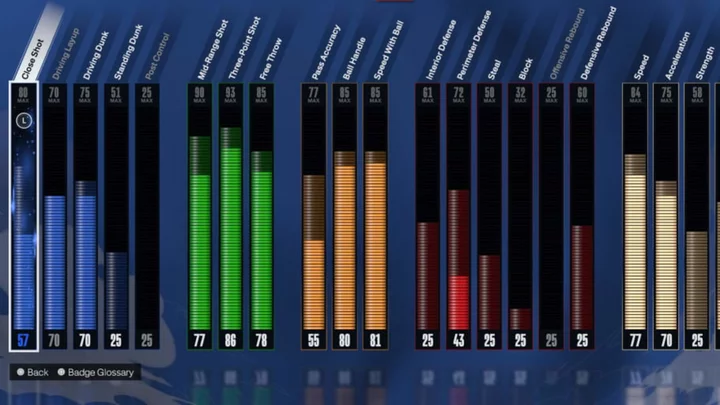
Which Attributes to Upgrade First in NBA 2K24 MyCareer
The best attributes to upgrade first in NBA 2K24 MyCAREER are Three-Point Shot, Driving Dunk, Ball Handle, Speed with Ball, and more.
2023-09-12 00:25
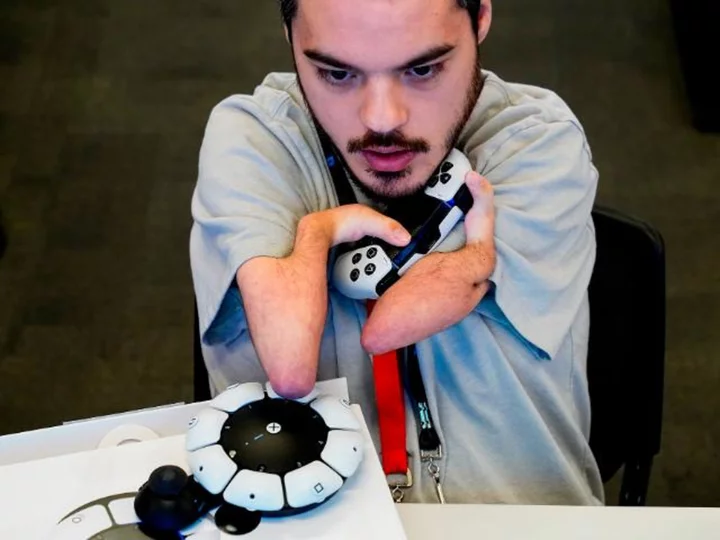
Sony's PlayStation Access controller offers a new social lifeline for gamers with disabilities
Grant Stoner said that he has loved playing video games his entire life, and that his earliest memory is of playing Super Nintendo in his parents' bedroom at roughly 3 years old.
2023-10-24 18:50
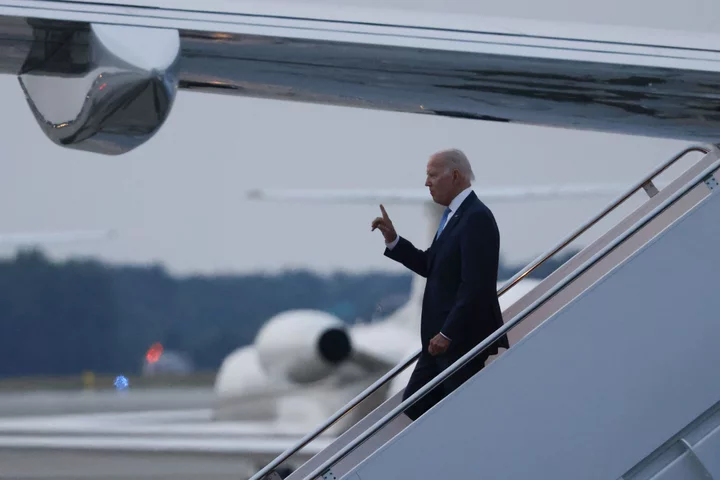
Biden to Meet AI Experts as He Pushes for Privacy Safeguards
President Joe Biden is scheduled to meet with business leaders and experts on artificial intelligence as his administration
2023-06-20 21:29

Google CEO Sundar Pichai to testify Monday in US Google antitrust trial
WASHINGTON Sundar Pichai, chief executive of Alphabet and its subsidiary Google, will testify on Monday in the once-in-a
2023-10-27 06:15

Indicted FTX founder Sam Bankman-Fried urges court to toss charges
By Luc Cohen NEW YORK (Reuters) -Sam Bankman-Fried, who has long denied stealing from customers of his FTX cryptocurrency exchange,
2023-05-09 10:46

Crowd overwhelms New York City's Union Square, tosses chairs, climbs on vehicles
Police in New York City are struggling to control a crowd of thousands of people who gathered in Manhattan’s Union Square for an Internet personality's videogame console giveaway that got out of hand
2023-08-05 05:22
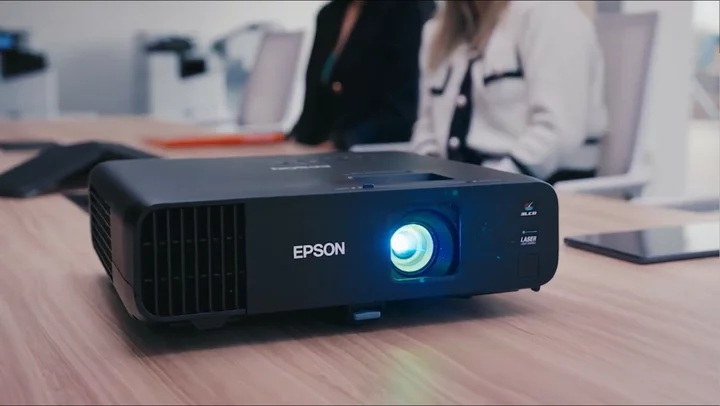
Epson Pro EX11000 3LCD Full HD 1080p Wireless Laser Projector Review
The Epson Pro EX11000 is almost the same as the Pro EX10000 that it's replacing
2023-08-11 08:29

Don't expect quick fixes in 'red-teaming' of AI models. Security was an afterthought
White House officials concerned about AI chatbots' potential for societal harm and the Silicon Valley powerhouses rushing them to market are heavily invested in a three-day competition ending Sunday at the DefCon hacker convention in Las Vegas
2023-08-13 22:21

FC 24 87+ Campaign Mix Upgrade SBC: How to Complete
The FC 24 87+ Campaign Mix Upgrade SBC is now live in EA Sports' Ultimate Team. Here's how to complete the SBC and the best players to pack from it.
2023-11-27 02:15

Nikon 70-180mm and 180-600mm Strengthen Z Telephoto Lens Library
Nikon is adding a pair of lenses to its growing Z mirrorless library. The Nikkor
2023-06-21 19:24

China's Didi swings to third-quarter profit, to buy-back $1 billion worth of shares
China's biggest ride-hailing company Didi Global on Monday reported a third-quarter profit as domestic demand for mobility services
2023-11-13 13:25
You Might Like...

Every Microsoft Surface laptop announced at the 2023 event

AMD Preps GPU to Challenge Nvidia's Grip on the Generative AI Market

Heung-min Son FIFA 23: How to Complete the Premium FUTTIES SBC

China Bans iPhone Use at Central Government Agencies, WSJ Reports

Toshiba board recommends shareholders support JIP-led $14 billion buyout
Chip Leaders Head to Washington to Lobby for China Rules Relief

Nintendo Direct teases a Princess Peach game for Switch

Adobe open to remedy discussions with EU on Figma deal, says chief counsel