Threads: What it’s like to use Instagram’s new Twitter rival
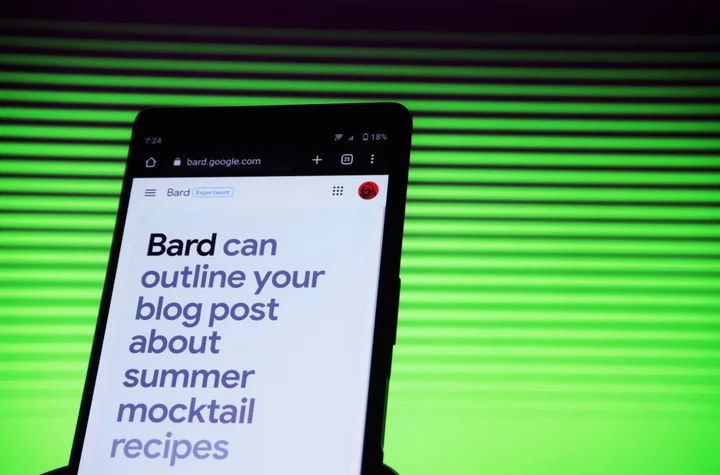
Threads, Instagram’s answer to Twitter, is finally here. After months of rumours, and amid what seems like it could be the decline of Twitter, Meta has launched its own platform for posting short text updates and replying to those from others. The app arrived overnight and is already picking up momentum, gaining ten million of downloads and signups in its first few hours. But what is it actually like to use, and will it be the thing that finally takes over from Twitter? Here are some first impressions of using the app, in the first few hours it is available. First impressions: Signing up and following people The sign-up process is astonishingly slick, in large part because of the app’s integration with Instagram. (So if you don’t use Instagram already, it won’t be quite so impressive.) This is already an important contrast with other Twitter competitors, such as Mastodon and Bluesky, which have complicated signup processes that could very easily put off potential users. Signing up means downloading the app, clicking your already imported Instagram login, and then choosing which of the accounts you follow there to copy over to Threads. Once that is done, you will be taken to the news feed. From there, everything will look very familiar: it is a combination of Twitter and Instagram, and that’s exactly what it looks like. If you’ve used those apps, you’ll probably already have a perfect sense of how it works, and even if you haven’t then everything is built to be as obvious and intuitive as possible. What is Threads like to use? The Threads app is astonishingly neat, and it already puts Twitter to shame. Everything is nicely sized to ensure that you can read posts and scroll through them, and the news feed is easy to navigate through. It is, mostly, like one of the third-party clients for Twitter, which Elon Musk killed off soon after he took over the site. Just like them, you get the basic functions of Twitter – replies, profiles and so on – but repackaged into a much nicer design. One of the big problems will be deciding who to follow from Instagram. Being able to post nice pictures on there is in no way an indication of a person’s ability to write nice text updates, and many of the best posters on Twitter would have been useless on a picture-focused site. When I open up Threads, for instance, it has a large focus on the kind of organisational account that I tend to follow for their nice pictures on Instagram. Those accounts are not necessarily quite so fun in text form. The other big problem is that the app is a lot less useful until people actually start signing up. If you don’t follow people already, then the feed will instead try to fill itself with posts from others, picked via an algorithm; just as it does on Instagram, that algorithm tends to pick quite boring and not especially relevant posts. An app like Threads – just like Instagram and Twitter before it – are only really as good as the people you follow. For now, there are fewer people to follow, and so it’s hard to say exactly how good or bad the app might end up being. Will Threads kill Twitter? Many apps have tried to succeed Twitter. Many have failed. But Threads is stronger than those that have come before, and Twitter is weaker than it has ever been. So the fact that no app has yet unseated Twitter does not mean that it is doomed. Much of that strength comes in the backing of Meta. It means that the app is slick and highly functional at launch, and comes with an existing network of people imported from Instagram. And much of the weakness of Twitter comes from timing. The site has gone from problem to problem under Elon Musk – but feels particularly troubled at the moment, after a weekend that saw a flurry of technical issues that brought with them an unusual response. However, Twitter has long served an unusual function in society, far beyond its actual size. Celebrities and major organisations have used it to make announcements; the media has used it to report on them. That importance within society meant that it stuck around long after its users became frustrated with it (and was probably the reason Mr Musk bought it in the first place). But that importance has already been disappearing: as a result of technical issues, a falling reputation and more, many of the individuals and organisations that gave Twitter its value have already left. It’s very likely that no other app will ever be able to recreate the combination of societal heft and blazing speed that marked Twitter out at its best. Not even Twitter can really do that anymore. It’s unlikely that Twitter will actually die soon: social networks tend to die not with a bang but with a whimper, and there will be probably be people that stick around long after the site has lost its place in society. But it is safe to say that it is already shrinking, and that Threads could accelerate that. So Threads might eventually kill Twitter: it already has a better design, and is less likely to prove controversial, and looks well set up to take users from its competitor site. But it might also not actually need to kill Twitter, which is dying already and might never be replaced. Read More Threads: What it’s like to use Instagram’s new Twitter rival Meta’s new Twitter rival app Threads gets over 5 million sign-ups How to get and use ‘Threads’, the biggest new social app Mark Zuckerberg launches his ‘Twitter killer’ app called Threads Judge blocks Biden agencies from communicating with social media platforms Meta’s Twitter alternative Threads to be launched this week
2023-07-06 15:54
Mitsubishi Power Delivers Hydrogen-Ready Gas Turbines to “IPP Renewed” Project in Utah to Meet Decarbonization Goals in the Western US
LAKE MARY, Fla.--(BUSINESS WIRE)--Jul 27, 2023--
2023-07-27 22:28
Best Buy’s Holiday Sneak Peek is Here
MINNEAPOLIS--(BUSINESS WIRE)--Sep 19, 2023--
2023-09-19 19:22
Founders of crypto mixer arrested, sanctioned after US cracks down on Tornado Cash
U.S. government officials on Wednesday started cracking down on co-founders of the virtual currency mixer Tornado Cash, just days after a federal judge decided that the government had the authority to sanction them
2023-08-24 02:21
Volcano discovery could power electric cars for decades, scientists say
Scientists say they have discovered the largest lithium deposit in the world inside an extinct volcano in the United States, capable of meeting global battery demand for decades. Volcanologists and geologists reported evidence of the McDermitt caldera on the border of Nevada and Oregon containing up to 120 million tonnes of lithium, holding the potential to disrupt the price and supply dynamics of lithium globally. The ancient supervolcano exploded around 16 million years ago, forming the rare metal inside its volcanic rock. Lithium ion batteries are used to power everything from smartphones to electric vehicles, however the vast amounts of lithium required to produce them has led to a “lithium rush”, according to the researchers. Current supply forecasts suggest roughly 1 million metric tons of lithium will be needed to meet global demand by 2040 – an eight-fold increase from the total global production last year. Calculations from researchers estimate that the McDermitt caldera could contain up to 120 million metric tons of lithium, making it 12-times larger than the amount of lithium in the salt flats in Bolivia, which were previously considered the largest lithium deposit on Earth. “Developing a sustainable and diverse supply chain to meet lower-carbon energy and national security goals requires mining the highest-grade domestic lithium resources with the lowest waste:ore strip ratios to minimise both the volume of material extracted from the Earth,”the researchers noted in a study, published in Science Advances. “Volcano sedimentary lithium resources have the potential to meet this requirement, as they tend to be shallow, high-tonnage deposits with low waste:ore strip ratios.” Mining could begin as early as 2026, according to geologists at Lithium Americas Corporation, who made the discovery alongside GNS Science and Oregon State University. However, the site for a proposed mine on the Nevada side of the caldera has already drawn protests from environmental groups, as well as two area tribes who claim it would be built atop sacred land. Responding to the latest discovery, Tesla boss Elon Musk said the deposit will only be economically significant to the electric car industry if it can be refined in an efficient way. “Lithium ore is quite common throughout the world. The limiting factor is lithium refining,” Mr Musk posted on X, formerly known as Twitter, on Sunday. “Same goes for the cathode, which is primarily iron (medium range cars) or nickel (long range) and the anode, which is carbon. Refining matters more than ore.” Read More Battery breakthroughs are about to trigger a transport revolution Former Alibaba chair Daniel Zhang steps down as head of cloud division How Google reshaped the world – and is about to do it all over again Update your iPhone immediately
2023-09-11 19:53
SEGA COO doubts Xbox will buy the Japanese firm
SEGA's COO doubts "that kind of transaction is going to happen".
2023-11-17 21:16
Why is Keith Lee's DoorDash hack on TikTok 'vaguely unethical'?
Keith Lee doesn't mind the use of his name for the hack! Does it work?
2023-05-09 19:17
Cerebras and G42 Unveil World’s Largest Supercomputer for AI Training with 4 exaFLOPs to Fuel a New Era of Innovation
SUNNYVALE, Calif.--(BUSINESS WIRE)--Jul 20, 2023--
2023-07-20 21:18
Elon Musk eyes ‘highly habitable’ planet that’s ‘practically next door’
A study detailing the habitability of a nearby exoplanet appears to have caught the attention of SpaceX boss Elon Musk. The tech billionaire has frequently spoken of his intention to transform humanity into a mult-planetary species through his private space firm, with plans to colonise Mars within the next few decades. The study of Proxima Centauri b, which sits within the so-called ‘Goldilocks Zone’ of the red-dwarf star Proxima Centauri, involved computer simulations to evaluate whether it can sustain liquid water that may harbour living organisms. “The major message from our simulations is that there’s a decent chance that the planet would be habitable,” Anthony Del Genio, a planetary scientist at the Nasa Goddard Institute for Space Studies said when the study was first published in 2018. The study concluded that Earth-sized planet is potentially the closest “highly habitable” planet to our Solar System, located 4.2 light-years away from the Sun. “Practically next door,” Mr Musk wrote in a tweet on Sunday, sharing the study. Proxima Centauri b has been the subject of several studies since it was first discovered in 2016, with astronomers attempting to assess whether it is capable of sustaining life. Similar to the Earth’s moon, the planet is “locked” due to gravitational forces, meaning that the same side of Proxima Centauri b always faces its parent star. Computational models suggest that the exoplanet’s circulating oceans and atmosphere act as an effective transfer of heat, so that its dark side is not permanently frozen. Despite its relatively close distance compared to other potentially habitable planets, travelling 4.2 light-years – or 40 trillion kilometres (25 trillion miles) – requires technology that is still in the conceptual stages of development. Nasa’s interstellar space probe Voyager 1, which was launched in 1977, would take 80,000 years to travel to Proxima Centauri, however the US space agency’s DEEP-IN programme aims to make the journey possible within a single lifetime. Scientists working on DEEP-IN claim that small crafts propelled by light could travel at speeds of up to 161 million kilometres per hour, and could reach the neighbouring star and exoplanet in 20 years. Mr Musk has frequently voiced his concerns about humanity’s long-term survival, claiming that setting up self-sustaining colonies on other planets is vital to ensure the continuation of our species. SpaceX has so far been at the forefront of these endeavours, developing its reusable Starship rocket with the intention of transporting people and cargo across the solar system. Read More Elon Musk refuses to pay Twitter’s Google bill Elon Musk claims AI will overtake humans 'in less than five years'
2023-06-13 02:59
Elon Musk forces firms to pay X $1,000 to keep gold ticks
Elon Musk will force companies on X to pay at least $1,000 (£770) per month in order to keep their verified status on the platform. From 7 August, any brand that does not pay the fee to the company formerly known as Twitter will lose the gold check mark that appears next to the account name. The latest strategy, which was first reported by The Wall Street Journal, comes amid declining ad revenues and fresh competition from text-based platforms launched by Meta and TikTok. Mr Musk responded to the report by stating that brands could also pay $1,000 per month for a verified organisation subscription. “This more than pays for itself in organic reach,” he posted on X. “The reason for the $1,000/ month is to set a moderately high bar to be a verified org, so that an org must be of non-trivial size to qualify and to make it expensive for scammers to create millions of accounts.” Earlier this month, the tech billionaire revealed that the company was suffering from negative cash flow issues after advertising revenue dropped by 50 per cent following his $44 billion takeover of the platform. Mr Musk has undertaken aggressive cost-cutting measures, which included firing more than 6,000 employees. He has also appointed former advertising executive Linda Yaccarino as the firm’s CEO in an effort to woo advertisers. The rebranding from Twitter to X could also open up new revenue streams, with Mr Musk planning to transform the social network into an “everything app” similar to China’s WeChat. X has already secured money-transmitting licences in three US states, which will allow payments to be integrated into the platform. Ms Yaccarino said on Monday that she believed X represented “the future state of unlimited interactivity”, integrating audio, video, messaging, and the ability to book and pay for goods and services. Powered by AI, X will connect us all in ways we’re just beginning to imagine,” she posted on X. “For years, fans and critics alike have pushed Twitter to dream bigger, to innovate faster, and to fulfil our great potential. X will do that and more.” Read More What is Elon Musk’s ‘everything app’ X? Elon Musk takes control of @X account from user who had held it for 16 years Elon Musk’s ‘X’ is already trademarked by Mark Zuckerberg What is Elon Musk’s ‘everything app’ X?
2023-07-27 19:22
Song of Nunu: A League of Legends Story Pre-Load Times for All Regions
Players would like to know pre-load times for Song of Nunu: A League of Legends, but the developers haven't released specific times.
2023-11-01 02:26
U.S. News changes its college rankings to emphasize diversity and remove alumni giving
U.S. News & World Report announced changes to the methodology of its controversial Best Colleges rankings to emphasize the success of diverse students and to remove the influence of alumni giving and class size, the media company said in a statement.
2023-05-24 00:47
You Might Like...
Conspiracy theories falsely link wildfires to 'smart cities'
Corsair K55 RGB Pro Review
Are Alix Earle and Braxton Berrios in a 'non-exclusive' relationship? Internet says, 'Sophia is enjoying this so much'
Amazon offers shoppers $10 to pick up purchases as it targets delivery costs
First Heat Wave This Year Declared in London and Across UK
Juul seeks authorization on a new vape it says can verify a user's age. Here's how it works
VMware Jumps on Interim UK Approval of $61 Billion Broadcom Deal
Exclusive-Meta to lay off employees in metaverse silicon unit on Wednesday