Google parent Alphabet slashes stake in trading app Robinhood
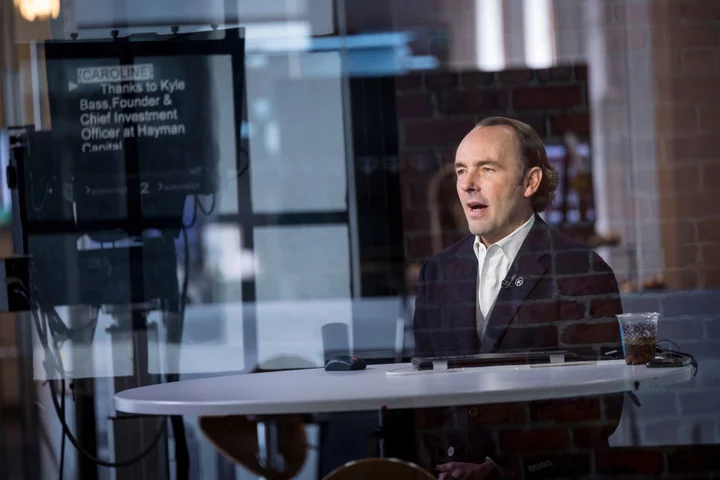
(Reuters) -Google-parent Alphabet has cut its stake in trading app Robinhood Markets by nearly 90%, a regulatory filing showed on
2023-08-04 18:51
HOMELINK Appoints John Unsen as Senior VP of Systems
WATERLOO, Iowa--(BUSINESS WIRE)--Jun 27, 2023--
2023-06-28 00:17
Microsoft changes its default typeface for only the second ever time
Microsoft is changing its default typeface for only the second ever time. For 15 years, Microsoft Office and other software has opened with one particular typeface: Calibri. By virtue of being the default look on some of the world’s most popular software, it might have been seen more than any other set of letters. Before that, Microsoft’s documents started with Times New Roman, a typeface that itself became famous largely as a result of being the default option. Now, however, Microsoft is moving on. Microsoft said that it had taken the decision in part because the technology used to display the typeface had changed, and that it needed to update for the higher resolution screens that are used today. And it is doing so with “Aptos”, a new font that was specially commissioned for the company, in a process it described as “exciting, but also intimidating”. It had done so with a view to finding a new font that could replace Calibre and have “sharpness, uniformity, and be great for display type”. Microsoft initially commissioned five new fonts, with the hope that one of them would become the default: Bierstadt, Grandview, Seaford, Skeena, and Tenorite. It added all of them to its software and allowed people to choose them from the picker and give feedback. Based on that information, Microsoft chose “Bierstadt”, and renamed it Aptos, though it will still live on under the old name too. The other fonts that lost out will also stay in the drop-down picker. Aptos will become the default typeface on Microsoft’s software, such as 365, which itself has replaced the well known Office suite. That will mean becoming the default font on Word, Outlook, PowerPoint and Excel and be seen by the hundreds of millions of people who use the software. The rollout will take place over the “next few months”, the company said. The font was named Aptos by its designer, Steve Matteson, after a town in Santa Cruz, where Microsoft said the “widely ranging landscape and climate epitomizes the font’s versatility”. The font was designed with “humanity”, Mr Matteson said, and with a view to allowing it to be “more universal and less mechanical or institutional”, he said in a blog post by Microsoft. For those that don’t like the new font, Microsoft has always offered the option to change the default font – including back to Calibri or Times New Roman. Read More Microsoft’s attempt to buy Call of Duty developer reaches huge new development Twitter starts making payments to its most controversial users What striking Hollywood writers and actors fear about AI replacing roles
2023-07-15 01:24
How to sign up to Threads
Threads, Meta's answer to Twitter, is here. Launched on July 6, the new standalone app
2023-07-06 18:20
Harris says Florida rules on Black history pushed by DeSantis are 'propaganda'
Vice President Kamala Harris swiped at new standards for teaching Black history in Florida during a trip to Jacksonville on Friday
2023-07-22 05:15
JPMorgan Chase is fined by SEC after mistakenly deleting 47 million emails
By Jonathan Stempel NEW YORK (Reuters) -JPMorgan Chase has been fined $4 million by the U.S. Securities and Exchange Commission
2023-06-22 23:55
People living near Yamuna River in New Delhi return home as waters recede
By Adnan Abidi and Gabrielle Fonseca Johnson NEW DELHI People living near a river running through India's capital
2023-07-17 19:56
How to Download MTG Arena: PC, Mobile Devices
Here's how to get started with MTG Arena on PC and Mobile devices, along with storefronts and download tips.
2023-05-13 05:16
How to Unlock ISO 45 SMG in Warzone Season 4
Players can unlock the new lightweight ISO 45 SMG for free in Sector D19 of the Call of Duty: Warzone Season 4 Battle Pass.
2023-06-14 23:58
Post founder Noam Bardin is on a mission to reinvent social media and break Big Tech’s destructive dominance
From fuelling genocide in Myanmar, kowtowing to authoritarian regimes and causing an epidemic of depression among teenagers, Noam Bardin has watched aghast as the platforms that promised to bring people closer together tore at the connective tissue of society. “Social media has become the worst of us”, the serial tech entrepreneur tells The Independent in an interview. “That’s by design. It’s not a bug, it’s a feature.” So he decided to build his own, Post, with a vision to reinvent the relationship between social media, its users and news publishers. Post launched in the App Store on 15 June, one of a number of start-ups vying to usurp Twitter as it lurches through a series of crises. Post’s soft launch When Twitter imploded last October during Elon Musk’s tortuous $44bn takeover, a flood of high-profile users announced they were ditching the site. Mr Bardin spotted an opportunity, and decided to rush Post into beta testing. He soon had more than 350,000 people on a waiting list, and initially allowed around 65,000 users onto the site. Mr Bardin said the decision to launch and capitalise on the chaos at Twitter may have been premature, but it allowed him to iron out flaws and convince news outlets that the app’s profit-sharing model could work. “Once we came out, suddenly, publishers were willing to come on board.” Mr Musk’s ownership has been plagued by a series of erratic decisions, including firing content moderators, promoting conspiracy theorists, declaring war on what he calls the “woke mind virus”, and using it as a tool to boost his own profile. The billionaire may not have been the cause of all of Twitter’s woes, but he certainly hasn’t helped, says Mr Bardin. “Twitter was a sick company before. It didn’t have a good business model. It couldn’t afford what it was doing. It didn’t provide value for the creators, and the toxicity was off the charts, right? “All these are kind of assuming that Twitter was an amazing, healthy company before Elon Musk came? Elon Musk obviously did his bit to destroy it.” Mr Musk’s belief that he could run a social media company was typical of the attitude among Silicon Valley venture capitalists, he said. “Silicon Valley is full of really, really smart people who have accomplished tremendous things. And because of that, they assume they can do anything and accomplish anything,” Mr Bardin said. “They like to talk about diversity, and they have diversity of people in terms of their backgrounds, skin colour and race, but everyone has exactly the same engineering MBA from Stanford or somewhere else.” Mr Bardin says he didn’t believe Twitter would ever disappear entirely, but that its profits and trustworthiness will continue to crater as users grow tired of Mr Musk’s antics. Post will inevitably draw comparisons to Twitter, but Mr Bardin sees it more like TikTok, a disruptor that exists alongside and improves an existing idea. ‘Ultimate product person’ Mr Bardin, 52, became a billionaire overnight when he sold his crowdsourced navigation app Waze to Google in 2013, After seven years as a vice president of product at Google, Mr Bardin quit suddenly in 2021. In a blistering farewell post, he wrote that the company mollycoddled its “entitled” employees who were more concerned with personal fulfillment and their 11am yoga classes than the products they worked on. Post was initially entirely self-funded by Mr Bardin. When he unveiled the app in November, he announced that Silicon Valley venture capitalists Andreessen Horowitz, which manages $35bn in assets, had come on board. Post’s only other investor is Scott Galloway, the author, podcast host and professor of marketing at New York University, who has said he invested “substantial personal capital” in the project. The partnership came about after the pair hit it off when Professor Galloway had the entrepreneur as a guest on his podcast. Professor Galloway, an outspoken critic of tech titans including Mr Musk, told The Independent in an email that he was convinced to invest in Post after hearing Mr Bardin’s vision to reimagine social media as a force for good. “From the outset, Post has been committed to healthier online conversation,” Professor Galloway said. “Elon’s mission, as evidenced by his relentless s***posting and public disdain for our elected leaders, appears to be the opposite.” Professor Galloway described his partner as “the ultimate product person”, a necessity going up against behemoths that invest billions in “keeping eyeballs glued to the screen”. “However, there’s another side to running a business in social, which Noam understands deeply — and that’s mission. “Specifically, what value are you providing to enhance societal discourse such that we can engage in truthful and respectful debate? Most social media companies are sorely lacking in this area, because the ad-based model forces their algorithms to value clicks and engagement over good-faith contributions to public discourse.” Professor Galloway said Mr Bardin was a “rare innovator who hasn’t made the mistake of believing his own press”. “He puts the product and the consumer before his own vanity, and that’s rare in tech these days. We need more leaders like that.” Mr Galloway’s Pivot podcast co-host Kara Swisher is also an adviser on the start-up, helping Mr Bardin connect with publishers. It’s the first time that Ms Swisher, a powerful figure in tech journalism for decades, agreed to help out an entrepreneur, such is her belief in the product. How Post works Post allows users to toggle between three feeds: following, explore and news. Users can follow individuals and topics they are interested in, create their own posts, like and repost other content. When users click on an article, it displays within their feed, rather than taking them through to a news site. For that, users are charged a micropayment of a few cents from their digital wallet, which goes directly to the publisher. More than 30 news organisations, including The Independent, The New Yorker, The Boston Globe, San Francisco Chronicle, Reuters and ProPublica, have already signed on as publishing partners. Mr Bardin explains that Post is pioneering a new business model that allows users to find and pay for reliable news. Since the dawn of the internet, media companies have missed “every opportunity” to carve out a slice of profits for themselves, he says. “They’ve been screwed by every tech platform.” He believes that the central idea to fixing social media is rebooting the relationship with news publishers. On Post, publishers can set the price of their content — usually a few cents per article. “We hope that we’ll have the critical mass on our platform that will give that breaking news from everywhere,” Mr Bardin says. “But we think that includes premium publishing, and newsletter writers and experts and creators. There’s a whole slew of new entities who are creating newsworthy content and want to be able to host it all.” A network of journalists, influencers and newsletter publishers including Dan Rather, George Takei and Robert Reich were early adopters of the platform. While keen to reimagine what social media can look like, Mr Bardin says his larger goal is to create a better informed society through promoting reliable information. He sees the rise of authoritarianism in his home country of Israel, Hungary, Poland and the United States as an existential threat similar to the climate crisis. “Americans like to think that Trump is a unique phenomenon. He’s not, he’s part of this wide agenda of authoritarians. And authoritarian regimes have never delivered the goods over time,” he says. “Putting aside global warming, which is the hardware problem, to me authoritarianism is the software problem.” Professor Galloway agreed that the social media giants had failed in their obligations not to “mess up” democracy. “In many cases, they intentionally look the other way and play dumb such that they don’t have to do the hard work of actually dealing with these issues.” Mr Bardin tells The Independent that he would never have caved to Turkish president Recep Tayyip ErdoÄŸan’s request to censor opposition parties ahead of recent elections. He expects to “have a problem” in India, where the party of prime minister Narendra Modi has made similar requests targeting political opponents, and accepts that Post will likely never be able to operate in China or Russia. “I find it very disheartening when I see so many American companies basically getting on their knees and removing any kind of moral in Western liberal value to try and operate in these countries. You have to be able to stand for something and if it means you lose a market, you lose a market. “Part of the problem is, the Second World War was a long time ago. So we forgot what the world used to be like. And so we’re allowing ourselves now to go down these paths that we know are terrible. “There are a million reasons for this, not just social media, but social media is one of them and it’s the place where I think I can make an impact,” he said. “I’m 52, this is my last company, and this is something I want to do for the next few decades. It’s something I think is super important.” Content moderation Mr Bardin sees Post’s content moderation being driven by the community, with good behaviour being rewarded, while trolls will be aggressively suspended and removed. The more you play by the rules, the more reach your content will receive. “And the more we’re gonna trust you on the platform, while being very aggressive on removing and suspending people that are just there to troll others.” He cites the genocide of Rohingya Muslims by the military dictatorship in Myanmar in 2016 and 2017 as a prime example of how big tech has failed. Facebook, the primary source of news in the country, allowed anti-Islamic hate speech to spread unchecked, which a United Nations Independent International Fact-Finding Mission found played a “determining role” in the massacre, rape and displacement of hundreds of thousands of people. “There’s no way that the moderator sitting in a call center in the Philippines will understand the Buddhist verse Muslim animosity in Myanmar. You can’t expect them to ever reach that level of understanding, but everyone in Myanmar understands it,” he said. Building a community to self-police bad behaviour and set its own standards would be key to Post’s success, he added. “We’re the platform for the 85 per cent of people who are not crazy, who want to get their news, get some opinions and say something, but don’t want to be called a fascist or communist.” Read More Elon Musk vs Mark Zuckerberg: Who would win a fight between tech titans? Inside the final days of Twitter 1.0: How Elon Musk razed us to the ground RFK Jr compares Elon Musk to American revolutionaries during conspiracy-driven Twitter event Four people were just locked inside a fake Mars habitat for a year-long study Apple releases urgent update to iPhone and iPad users Twitter hacker who took over Musk, Obama, Biden accounts gets prison sentence
2023-06-27 05:50
Krafton gets approval to resume battle-royale game in India
South Korea's Krafton Inc, a company backed by China's Tencent, on Friday said it received approval from Indian
2023-05-19 13:58
Cogent selects GTA’s GNC Data Center for Guam Point of Presence
TAMUNING, Guam--(BUSINESS WIRE)--Aug 7, 2023--
2023-08-08 07:53
You Might Like...
GM Cruise unit suspends all driverless operations after California ban
FTC appeals judge's ruling that would allow Microsoft's Activision Blizzard takeover
Overwatch 2 Patch Notes Oct. 10: All Hero Buffs and Nerfs
Scientists receive powerful ‘fast radio burst’ from the depths of the universe
The best headphones for 2023 (and why they've made our list)
AI Will Create—and Destroy—Jobs. History Offers a Lesson.
Scientists say drinking coffee gives ‘special boost’ to the brain
BOE’s Mann Says Climate Change Poses Persistent Inflation Threat